
Planting a pocket forest at Clarence High School
24 June 2025 | Students at Clarence High School dedicated time recently to getting their hands dirty and put more than 100 native plants in a special space on the school grounds.
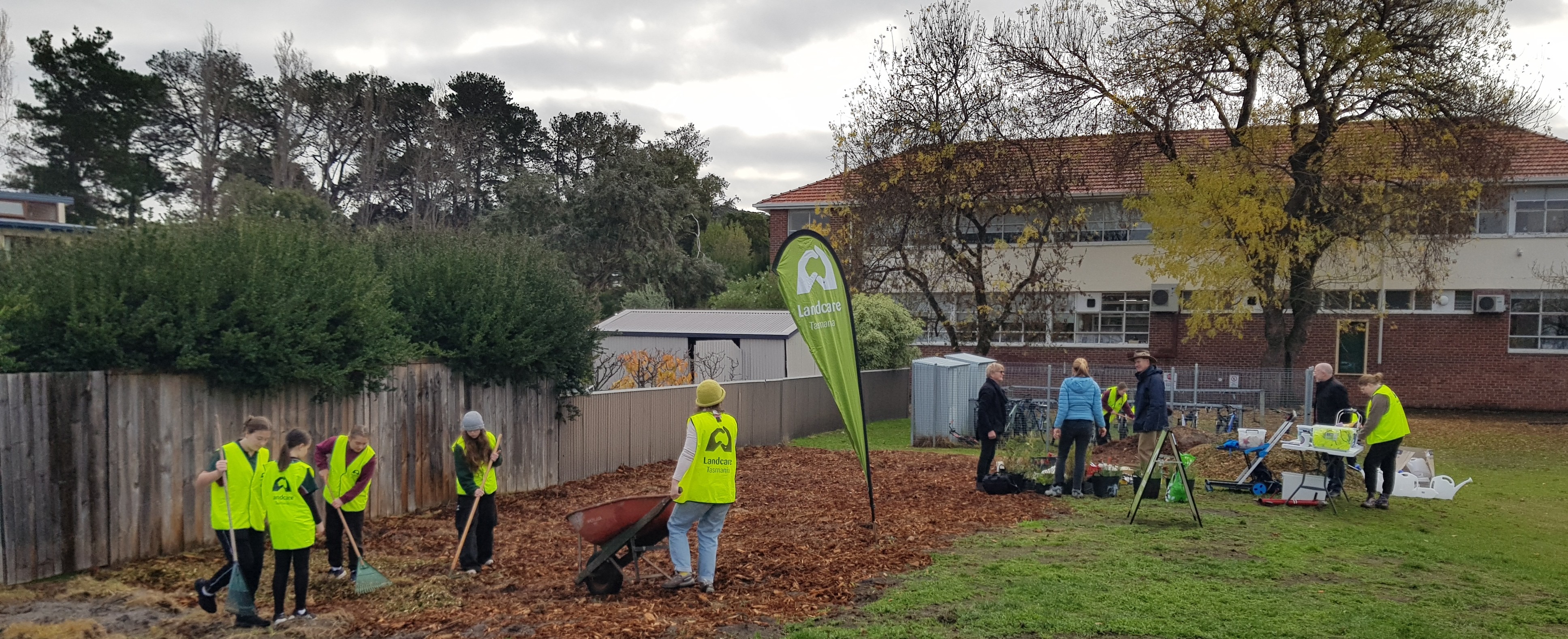
Site prep underway at Clarence High School as part of their planting day. Photo: Nel Smit.
This pocket forest will form part of their school’s living legacy. Students' involvement supports not just indigenous species, but also future learning spaces, shade, and a stronger connection to nature.
What is a pocket forest?
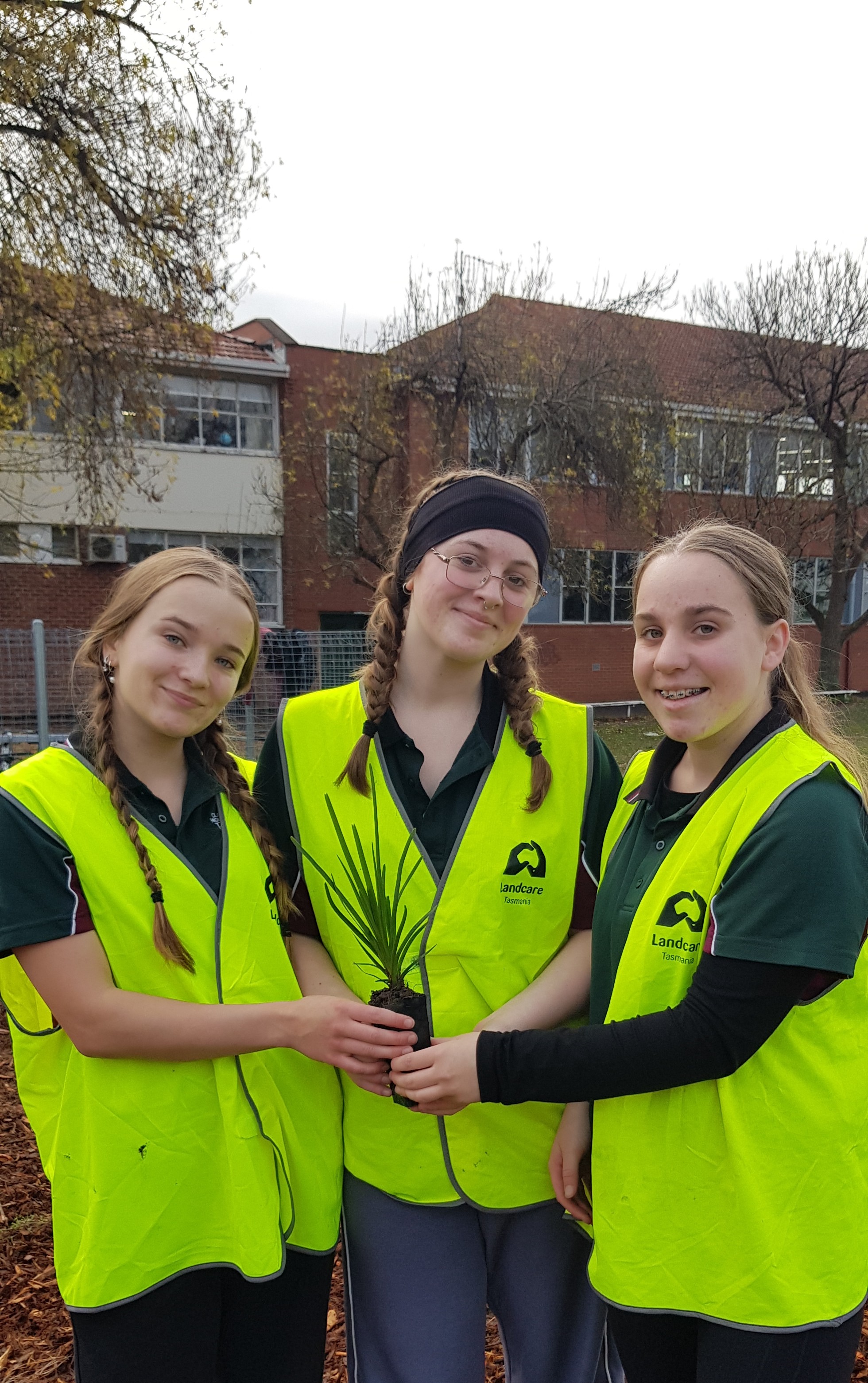
Students ready to get native plants in the ground as part of their pocket forest project. Photo: Bianca Burford.
This planting activity was delivered in partnership with Landcare Tasmania and the Bellerive-Howrah Coastcare Group, and supported by the Bupa Landcare Grant — a program linking environmental health with community wellbeing.
Learning through connection
Representatives from Landcare Tasmania and Nipaluna Nursery shared their knowledge on:
-
The role of Landcare Tasmania in environmental stewardship.
-
The work of the Bellerive-Howrah Coastcare group, who care for the nearby beaches, dunes, and bluffs through weeding, rubbish removal, and planting native species to restore biodiversity.
-
Nipaluna Nursery who supported the pocket forest with indigenous plants. This native plant nursery is dedicated to growing and promoting locally indigenous plants of the nipaluna/Hobart region. Their volunteers also attended the event, assisting the students to plant the pocket forest.
-
The value of native and locally indigenous plants: species that support local wildlife, are adapted to the area’s conditions, require less water, and enhance soil health.
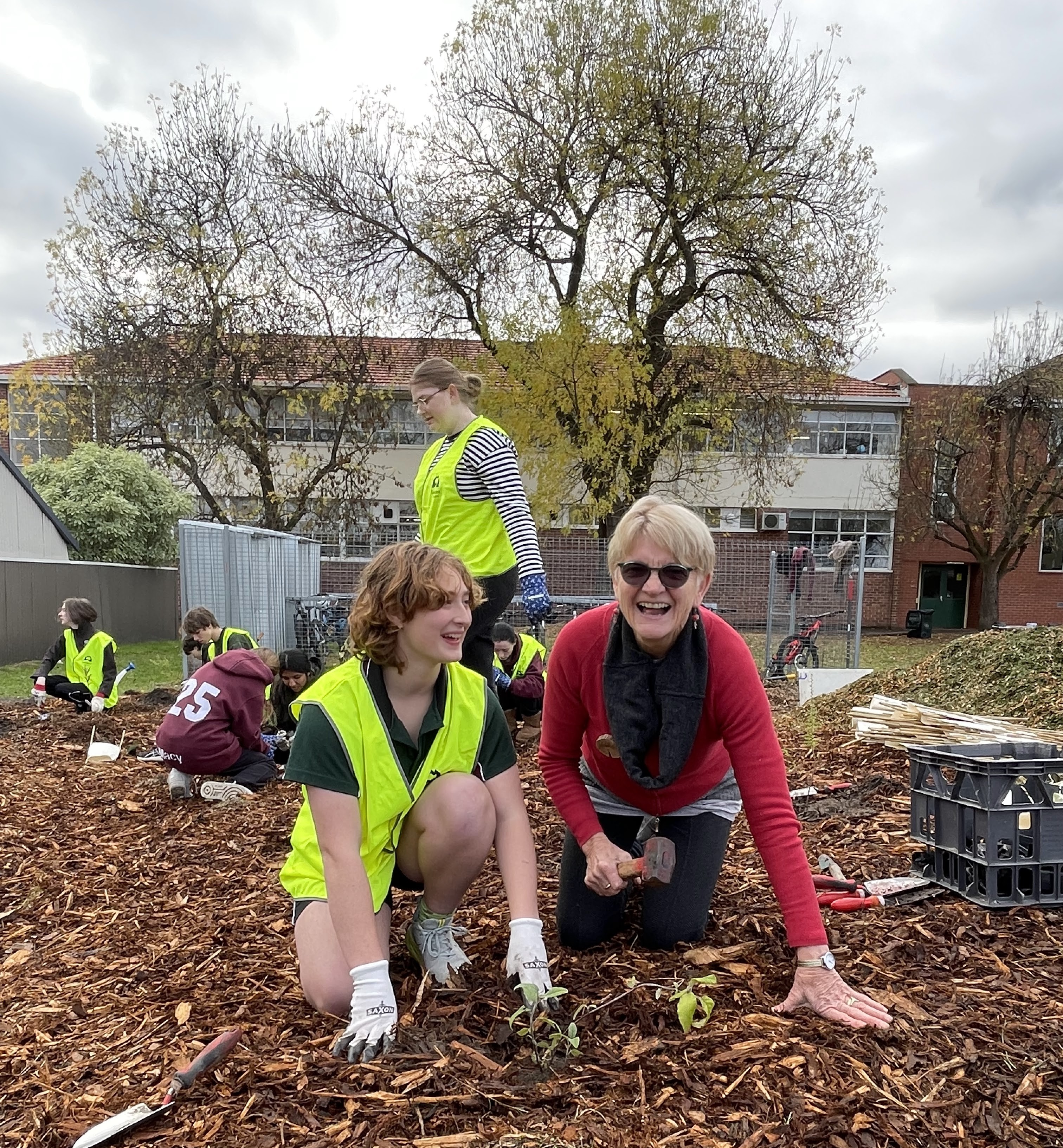
Team work: Nel Smit from Nipaluna Nursery working alongside a student to get native plants in the ground for the pocket forest project. Photo: Bianca Burford.
Students had a conversation on native plants such as:
-
Poa grass – habitat for bandicoots
-
Black wattle (acacia) – nitrogen-fixing, soil-enriching
-
Sheoak – food for cockatoos and natural weed suppressor
-
Banksias – a nectar source for pollinators like honeyeaters
-
Flowering natives – support for Australia's 1,650+ species of native bees
They considered: “How do you feel in nature?” — linking environmental care to mental wellbeing, learning, and climate resilience.
Wildlife and biodiversity focus
Students explored what animals might visit this new pocket forest, learning from iNaturalist data and local observations.
Species likely to benefit include:
-
Southern Brown and Eastern Barred Bandicoots
-
Swift parrots
-
Masked owls and wedge-tailed eagles
-
Green and gold frog
-
White-bellied sea eagles
Particularly highlighted was the southern brown bandicoot, a protected species in Tasmania and a keystone 'ecosystem engineer' that helps improve soil health through digging and foraging. Their survival depends on the restoration of scrubby, native vegetation — exactly what this pocket forest provides.
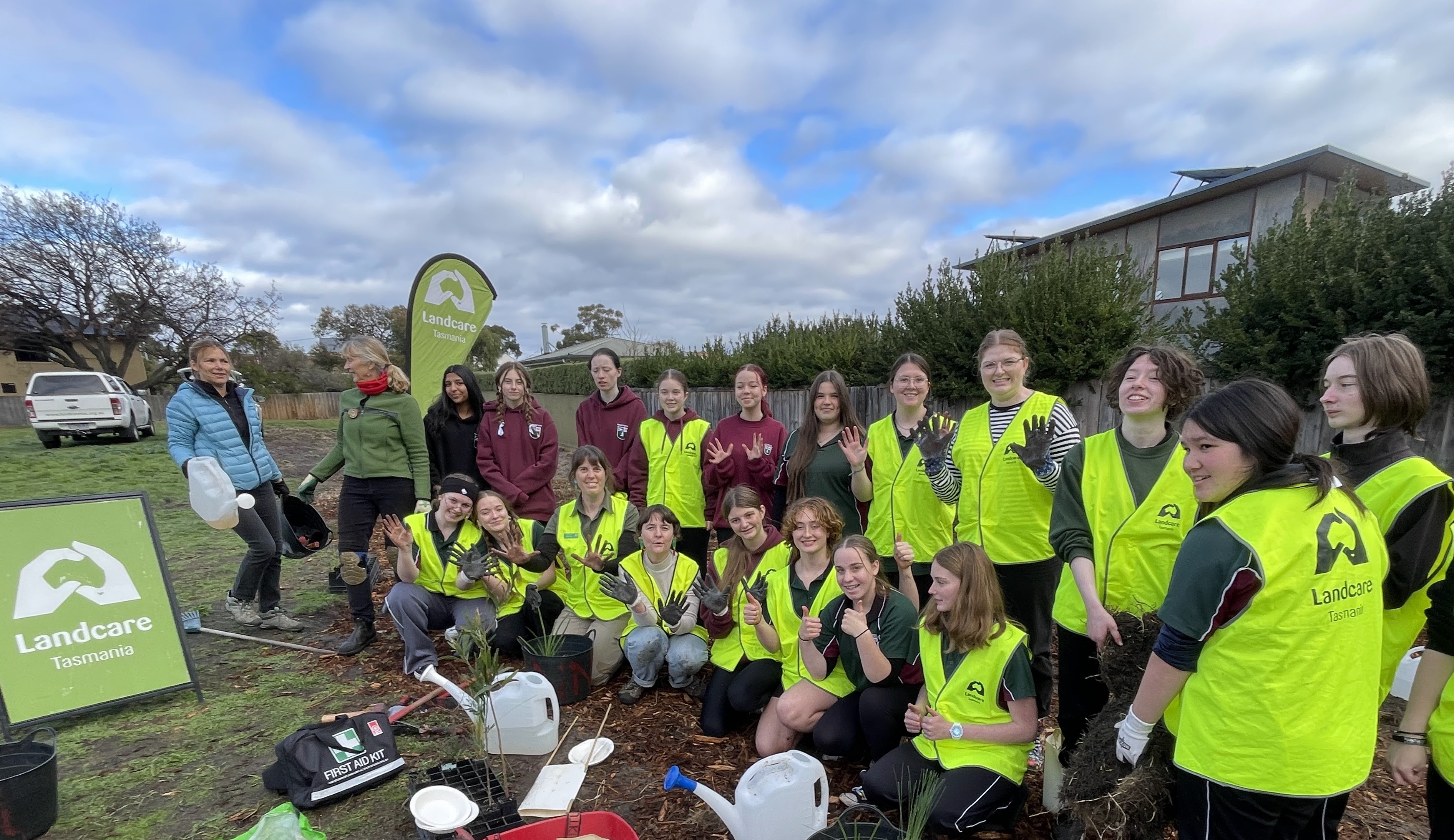
Satisfaction after a great planting session! Photo: Nel Smit.
Student contribution and action
Students played a key role in site preparation, having previously moved large amounts of mulch — a task compared to the soil-moving power of a bandicoot, which can shift the equivalent of an elephant’s weight in soil per year!
On the day:
-
Students learned how to plant properly and safely: digging, teasing roots, adding fertiliser and water, and spreading mulch.
-
They practiced team roles, working in groups to ensure success.
-
Watering and aftercare plans were discussed, empowering students to take ongoing ownership of the site’s maintenance: watering deeply, weeding regularly, and monitoring growth.
A lasting legacy
This planting is just the beginning — the second planting session will be held on 27 July at the school.
This will be a Community Planting day.
Please RSVP your interest in attending here.
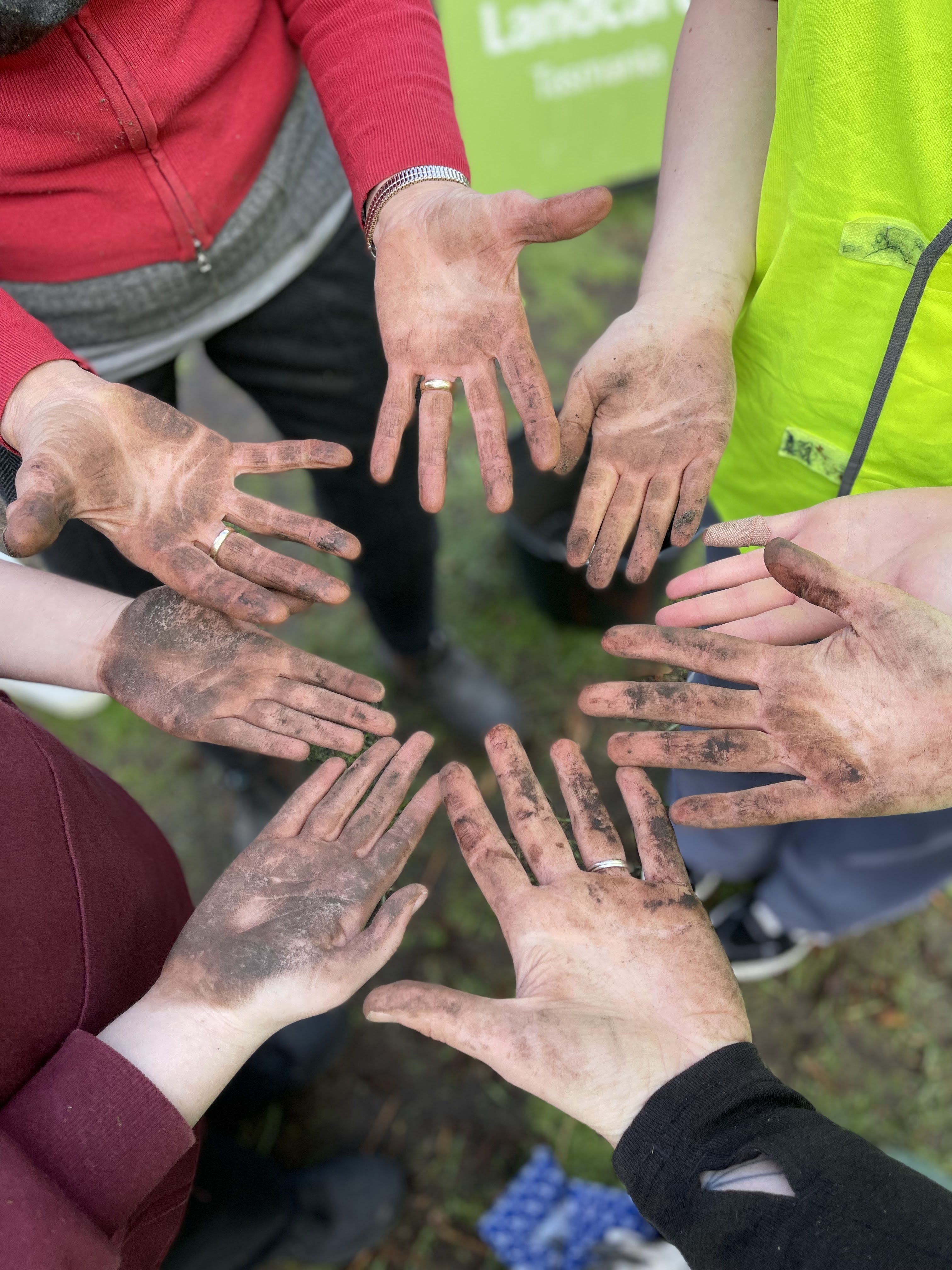
Photo: Nel Smit.
Thanks and reflections
A huge thank you to the students for their enthusiasm, care, and hard work, and to our partner organisations and funders for making this day possible.
Students shared feedback via postcards, capturing their thoughts and feelings — many reflecting a strong sense of pride, peace, and connection to the natural world.
Linn – “It makes me feel really happy and proud. I’ve always been passionate about the environment and this has been a way for me to express that with my friends and teachers. I’m really grateful to have had this experience and opportunity at school.”
Alexis – “It’s so nice to know that something I made will be here for a long time.”
Teacher Olivia Hanson – “It’s been amazing for me to see my students step up and be the young leaders that they know that they are and to get involved in this project. Our pocket forest is a legacy that our students will be able to look back on and be really proud of the work they’ve done.”