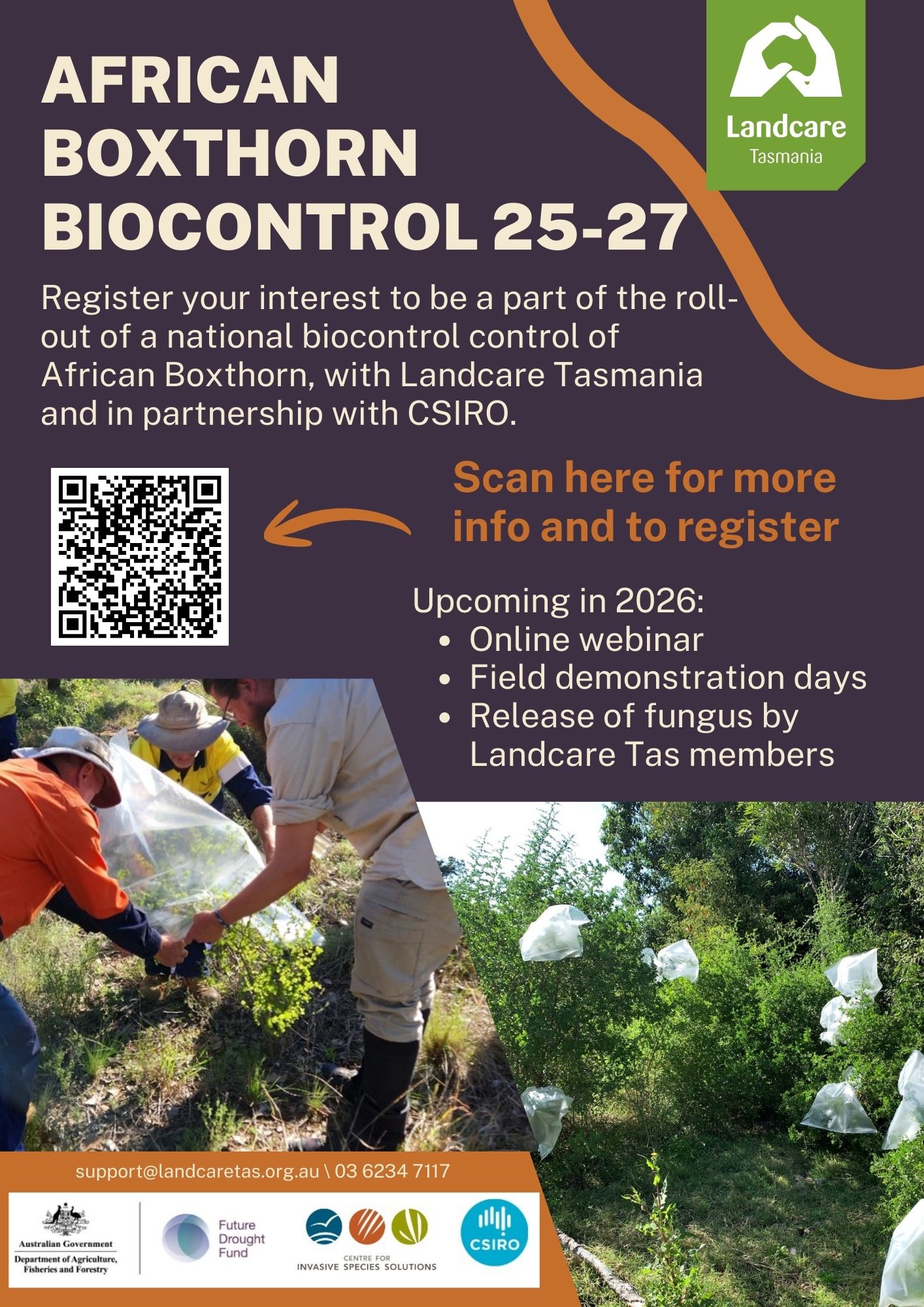

National African Boxthorn Biocontrol Project 2025-27
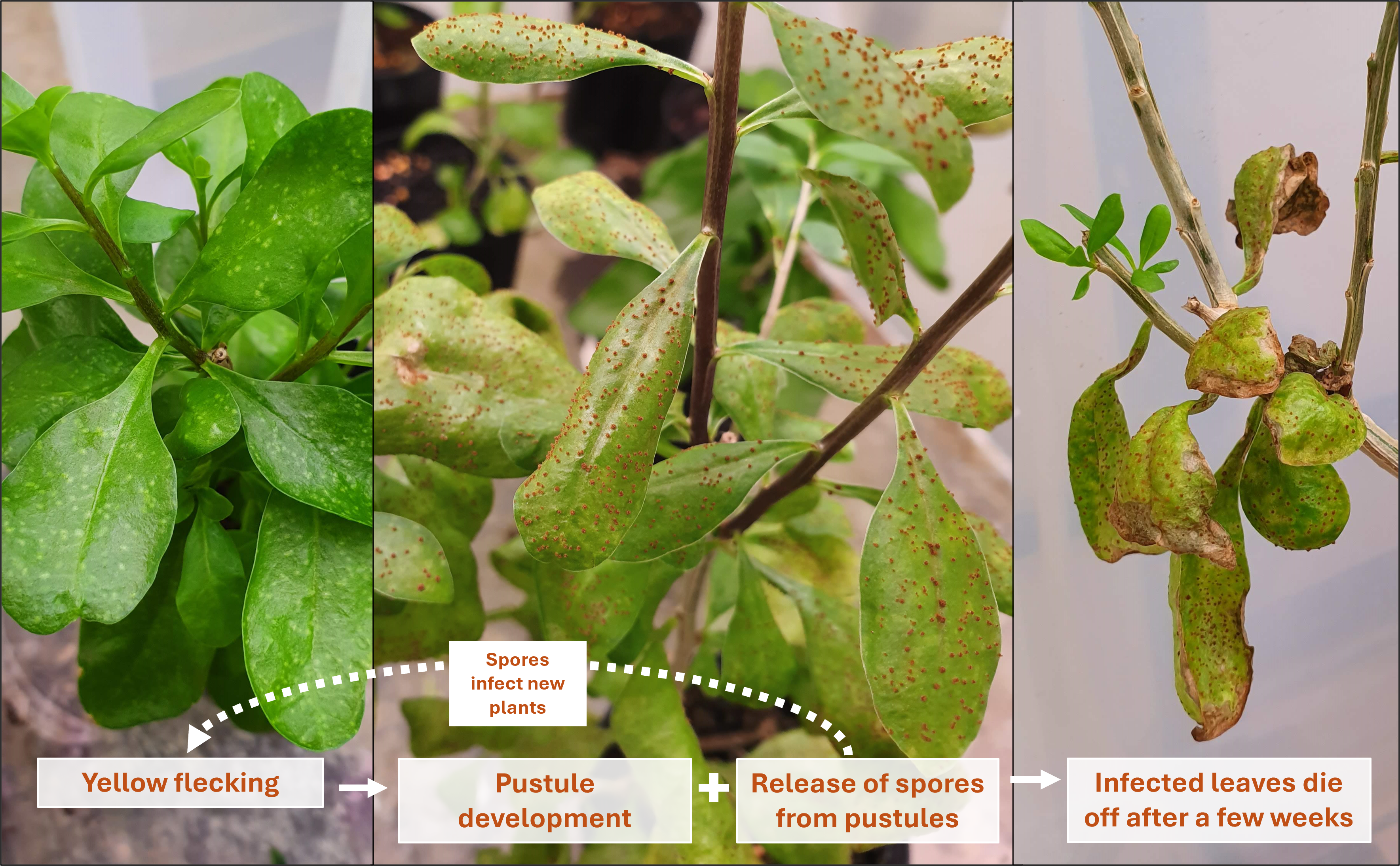
Disease progression of the invasive African boxthorn (Lycium ferocissimum), a drought-tolerant Weed of National Significance. Photo courtesy of CSIRO.
Landcare Tasmania, in partnership with CSIRO, is inviting all farmers, First Nations communities, Landcare members, stakeholders and community members who would like to help roll out the new nationally approved biocontrol solution for African Boxthorn between 2026-2027.
African Boxthorn (Lycium ferocissimum) is a drought-tolerant Weed of National Significance that undermines agricultural productivity, biodiversity, and drought resilience across Australia. Native to South Africa, this weed is difficult to control due to its establishment as dense and thorny thickets, its presence and ability to spread across a broad range of landscapes, and its ability to regenerate after chemical control and resprout following mechanical removal - meaning ongoing control requires significant effort and investment and is challenging to achieve at a landscape scale.
The CSIRO-led African Boxthorn biocontrol & Drought Resilience project is a nation-wide project that aims to suppress the invasive weed through the release of an approved biocontrol agent, the rust fungus Puccinia rapipes, that infects the leaves and fruit of African boxthorn plants.
This safe, host-specific rust fungus will be mass-reared at CSIRO’s Canberra and Perth facilities and deployed at more than 400 sites nationwide.
How does the biocontrol work?
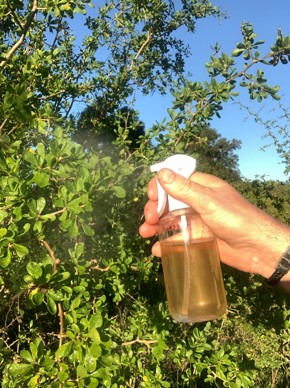
Applying rust fungus on Boxthorn plant. Photo courtesy of CSIRO.
The rust fungus infects African Boxthorn leaves, causing yellowing and small brown pustules that release wind-dispersed spores, which can then infect leaves on nearby plants. Infected leaves gradually die back, and if the fungus becomes widespread on a plant, it can cause defoliation and reduced fruit output.
In Australia, the rust fungus will not kill African Boxthorn. However, if it establishes well and causes severe disease in the weed, it will reduce its growth and reproductive output (i.e., fruit and seeds) over time. This may lower its ability to spread, though it will not eradicate the plant. The value of biocontrol lies in reducing the invasion threat of African Boxthorn at the landscape scale and slowing rates of re-invasion following chemical or mechanical control. By doing so, it helps to lessen the long-term management burden across large areas. Biocontrol is designed to complement existing tools (providing ‘another option in the toolbox’) but not replace them.
Extensive studies since 2017 have also shown that the rust fungus does not infect native Australian plant species, including the native Boxthorn, Lycium australe. It is safe for release into the Australian environment.
Watch the webinar recording:
How to participate:
Register your Interest Here! (Landcare Tasmania members only)
Register your Interest Here! (Non-Landcare Tasmania members)
Attend a local Field Day Demonstration (coming soon)
Participants will be able to register interest above and receive biocontrol kits from CSIRO containing the rust fungus Puccinia rapipes, along with clear instructions for its release and monitoring. You will be supported by an online webinar, field days across the state and information to safely release the fungus and contribute data via national platforms.
Participants will contribute their time and effort to release the fungus at local sites and track its impact. This includes managing site access and any necessary approvals. The program is especially suited to First Nations communities, farmers, community groups, and government agencies already working to control African Boxthorn. Release of the biocontrol agent will need to be done in autumn to early spring and monitoring the biocontrol agent establishment 10 weeks post application. Releases of the biocontrol agent should only occur on land where you have permission to make releases.
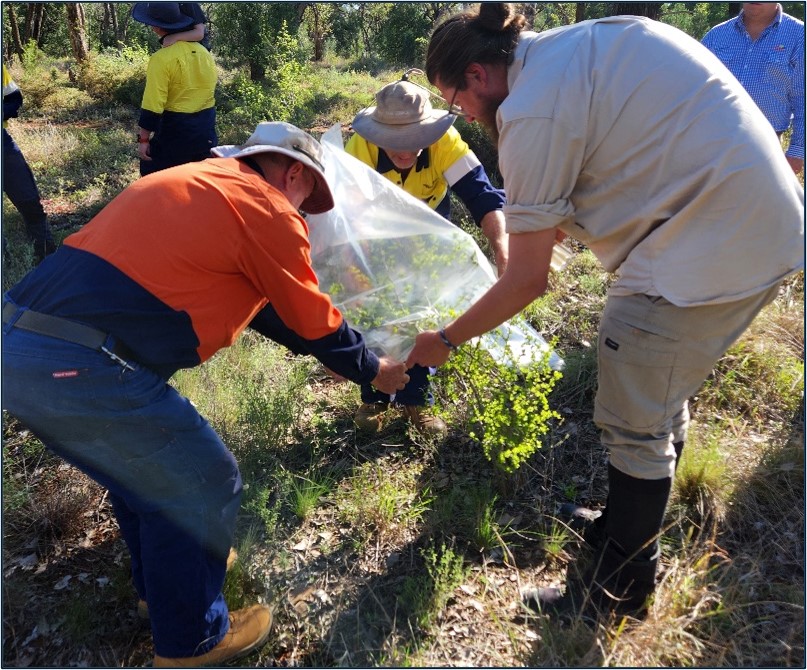
CSIRO biocontrol workshop. Photo courtesy of CSIRO.
What's included:
- Biocontrol agent release kits free of charge,
- Training materials and online resources,
- Access to dedicated CSRIO staff who can help design release programs tailored to local needs,
- Workshops and field demonstrations,
- Presentations of results at conferences and community forums.
Important resources:
African Boxthorn Biocontrol Information Sheet
Biocontrol Agent Release Guidelines
CSIRO African Boxthorn Biocontrol Information
Landcare Tasmania Project Flyer
Watch the recap videos from Ben's demonstration from our southern event #1:
Watch the recap videos from Ben's demonstration from our southern event #2:
By joining the African boxthorn biocontrol network, you will help suppress a major weed, strengthen drought resilience, and play a vital role in shaping the future of biocontrol in Australia.
The African Boxthorn Biocontrol and Drought Resilience Project is a national initiative led by CSIRO, supported by the Centre for Invasive Species Solutions and funded by the Australian Government’s Future Drought Fund.