

The Ripple Effect Project
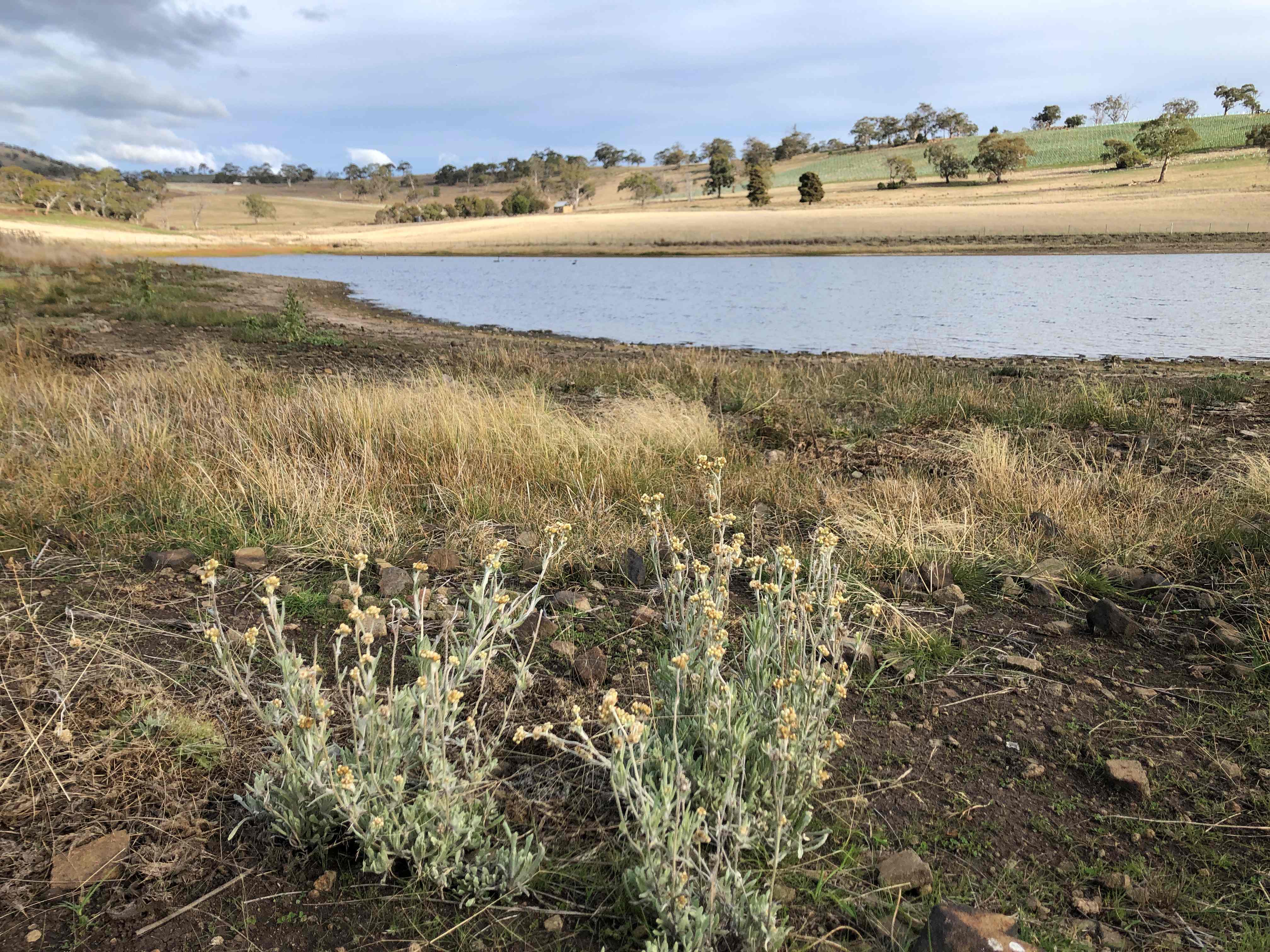
Photo: Jersey cudweed regenerating around the Logie Farm demonstration dam.
Funded by a $5 million grant from the Australian Government’s Natural Heritage Trust Climate-Smart Agriculture program, the Ripple Effect project will leverage cutting-edge water management practices to boost agricultural productivity, sustainability, and carbon reduction efforts.
This project will help guide farmers towards multi-function water infrastructure that enhances and provides future biodiversity and carbon market opportunities while enhancing water security and quality.
The Grower Group Alliance (GGA) in Western Australia leads this consortium which includes five universities and is supported by the eight National Drought Resilience Adoption and Innovation Hubs to deliver information nationally.
The project will engage with Natural Resource Management, Landcare and grower groups to drive the adoption of innovations in water security and quality, biodiversity and emissions reduction to protect natural resources, drive productivity and profitability, which will create enduring national impact.
The project activities focus on achieving:
- enhanced farm water security: improving on-farm water resources to sustain productivity and resilience amid increasing climate variability
- carbon sequestration and emission reductions: applying practices that capture carbon and minimise emissions in agricultural systems
- increased social connection and awareness: engaging local communities and fostering connections among regional growers for stronger, more resilient communities.
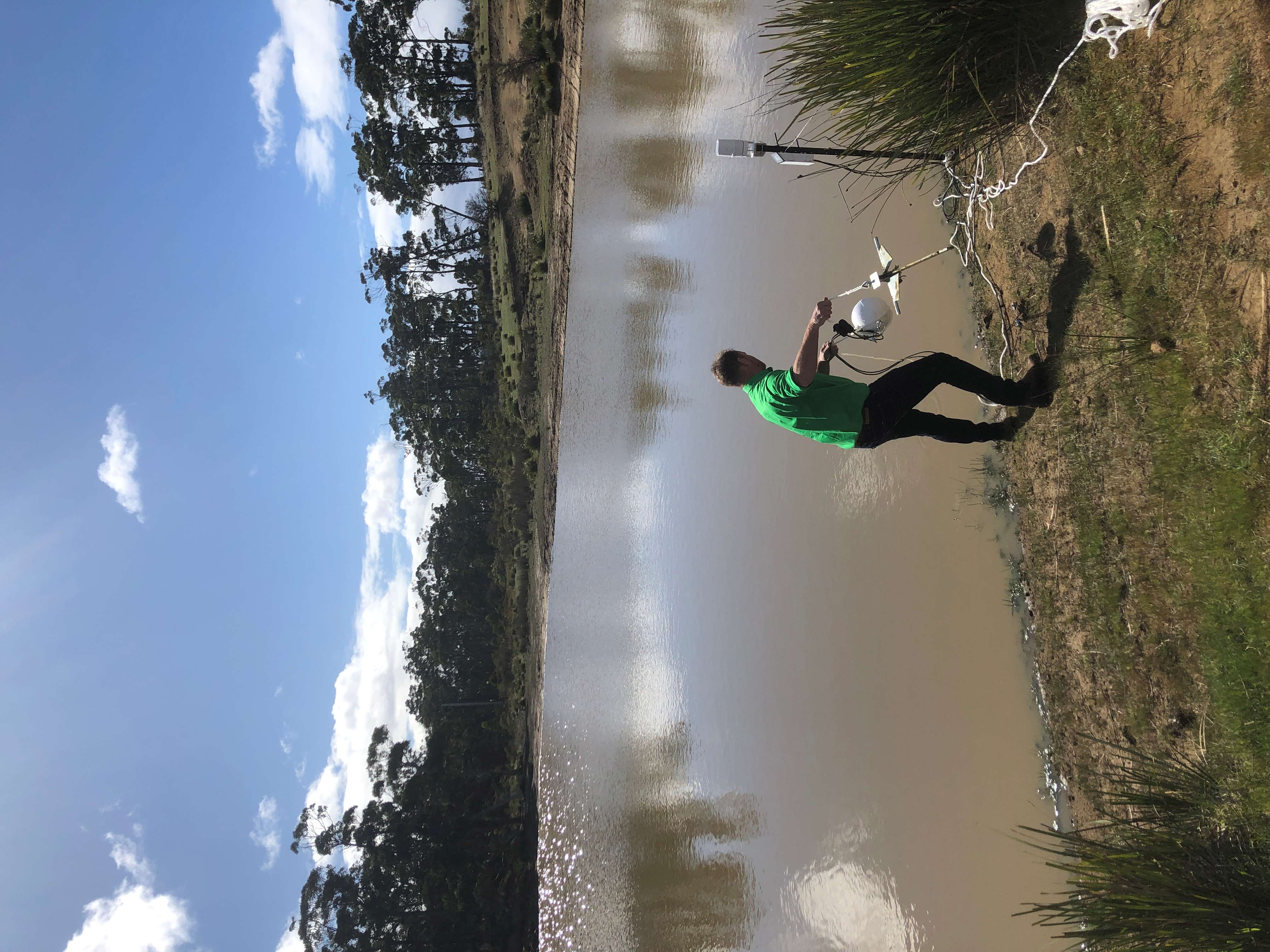
Photo: Mike Scobie, University of Southern Queensland, installing a water evaporation and seepage monitor at Murrayfield.
Landcare Tasmania has established two sites in southern Tasmania, where we are working with the land managers, and guidance from the universities, to demonstrate the benefits of farm dam enhancement, through monitoring. Using two dams on each farm - one that is being enhanced and one that is not - we are monitoring changes to greenhouse gas emissions, biodiversity and water quality as a result of farm dam enhancement.
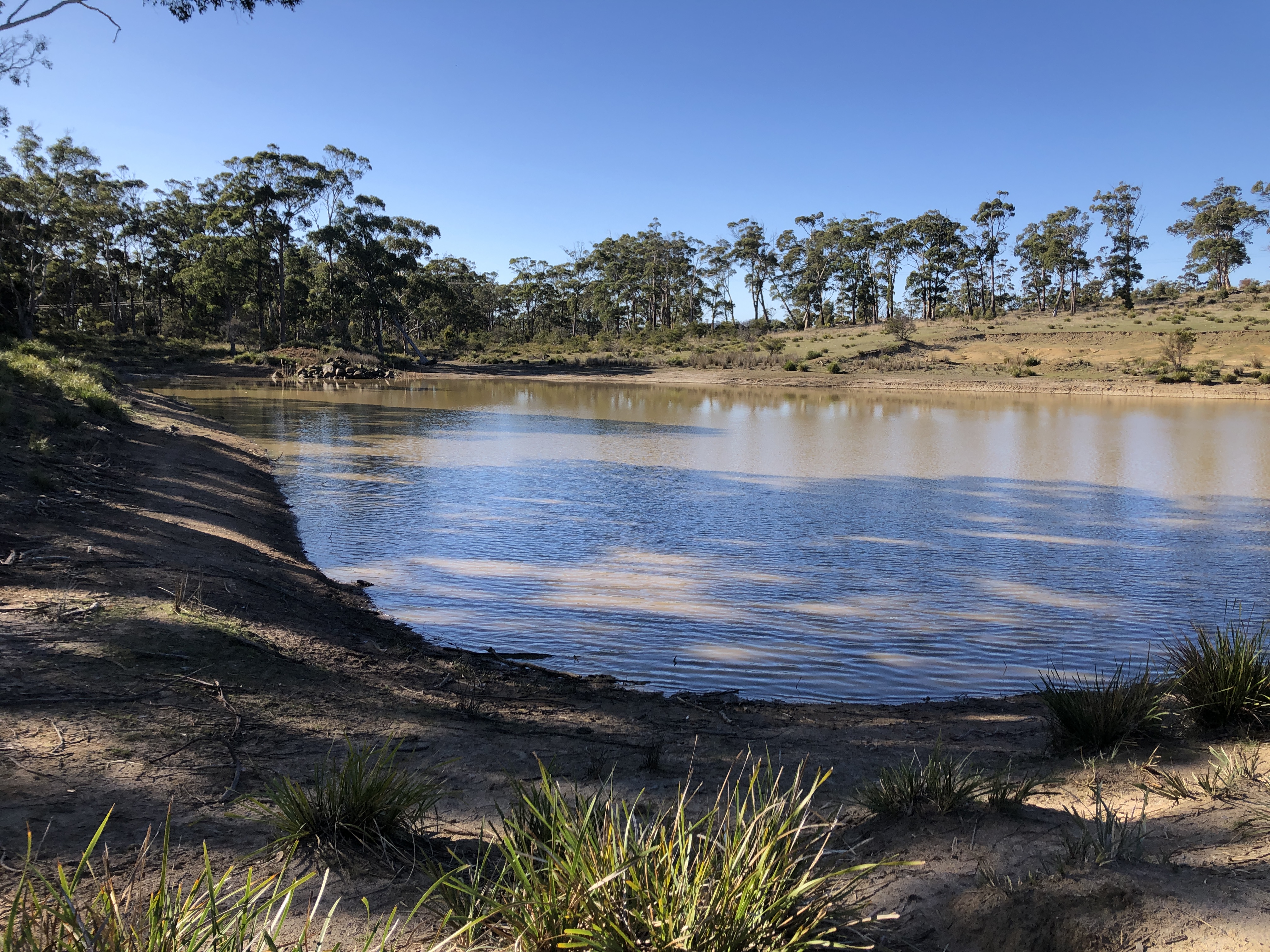
Photo: Murrayfield demonstration dam prior to farm dam enhancement.
Video of project partners visiting Tasmania
The Ripple Effect project is a national, grower-led initiative designed to improve water security, biodiversity, and emissions outcomes for Australian farmers. In October 2025, The Ripple Effect project partners headed to Tasmania, to tour some of the state's demonstration sites. The tour included a visit to a cattle property in Orielton, as well as a sheep enterprise on Bruny Island, run by the Weetapoona Aboriginal Corporation.
The project partners included Cassie Strain from Landcare Tasmania, Michael Scobie from the University of Southern Queensland and Dr Daniel Kidd and Lucy Tomassini from the Grower Group Alliance in WA. The team got an overview of the farming operations and the issues they face securing quality water for livestock over the summer period. Both landholders were keen to invest in their farm dams, with the project to assist with fencing and revegetation, and measurement of biodiversity, water quality and GHG emissions overtime.
Michael Scobie implemented water balance sensors on Bruny Island to better understand the evaporative and losses at the site. The data generated will help with decisions on water security investments, such as stop leak products for seepage or mitigation of evaporation, including planting vegetation for windbreaks.
This project is supported by the Australian Government through funding from the Climate-Smart Agriculture Program under the Natural Heritage Trust.
Find out more:
The Ripple Effect Project web page, Grower Group Alliance.
Sustainable Farms, Australian National University.
Water Knowledge Hub, Grower Group Alliance.
University of Western Australia water evaluation platform.
The Centre for Nature Positive Solutions

