

Ecuador, Landcare and building what comes next
Update from Landcare Tasmania chief executive officer, Peter Stronach
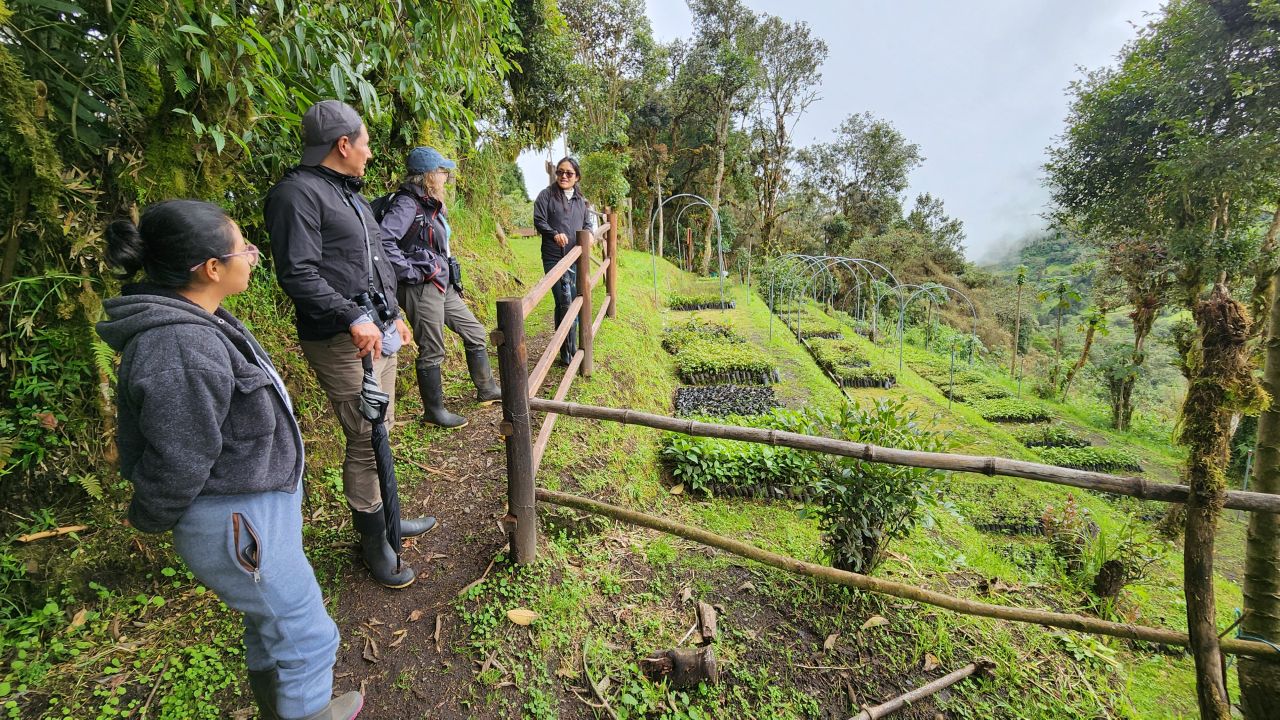
Visiting local communities near Quito including the Corporacion Yunguilla community, in the Chocó Andino bioregion. They have created a local value chain including cheese and condiment making, community-based eco-tourism, vegetable production, and community-led nursery and restoration projects.
Recently, I spent time in Ecuador working alongside communities managing landscapes not so different from our own. Different place, different pressures, but the same core idea: local people, working together, caring for Country over time.
I was also there representing Landcare Tasmania through the International Partnership for the Satoyama Initiative, a global network of over 350 organisations across 70 countries focused on sustaining socio-ecological landscapes.
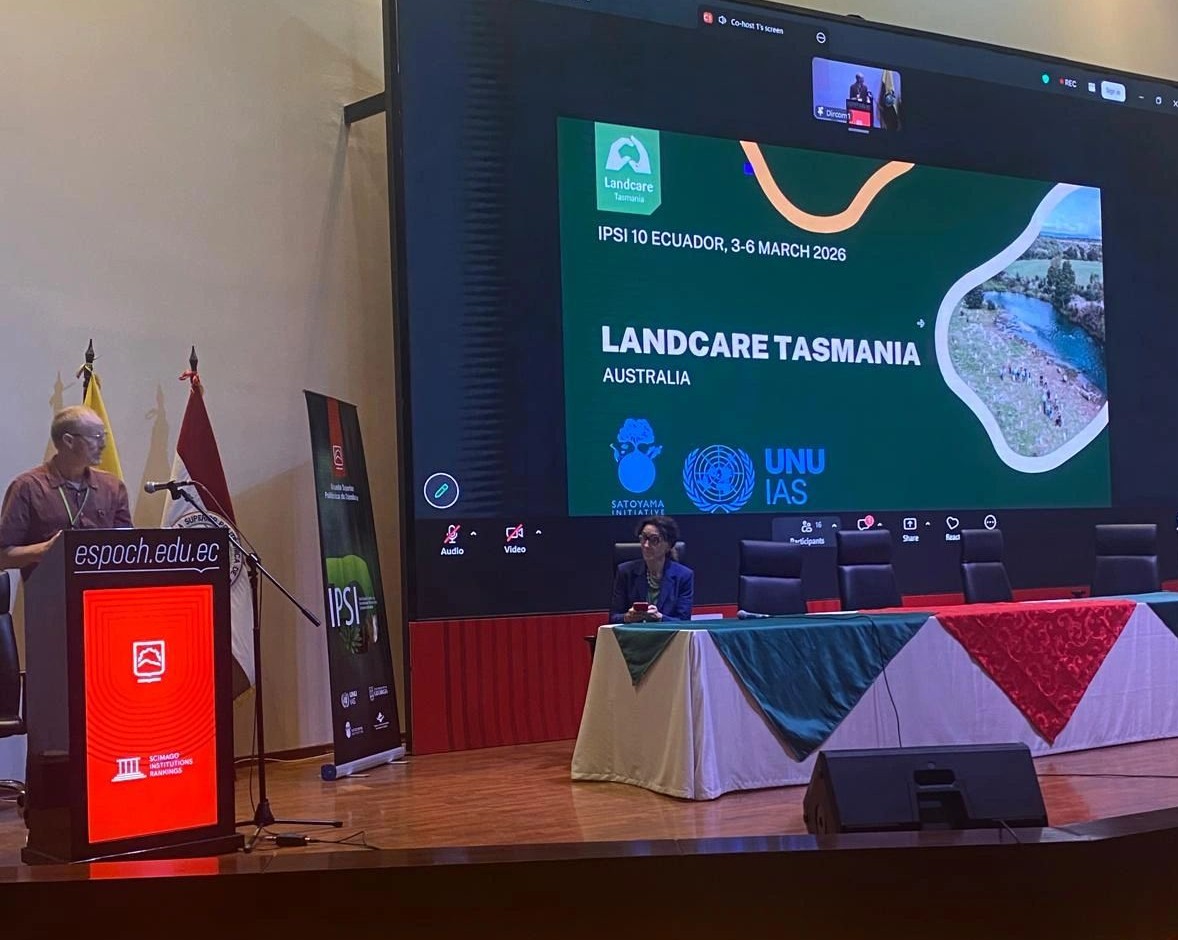
Peter at the IPSI global conference, presenting on the strength of Tasmania’s community Landcare model and how it can help shape international approaches to ecological restoration.
What stood out wasn’t that Tasmania has all the answers. It’s that no one does.
Across Ecuador, and in conversations with others at the conference, it was clear that strong community-led work is happening everywhere. Some regions have elements of what we would recognise as social infrastructure with networks, support roles, partnerships, but it is often fragmented, under-resourced, or still emerging.
That’s where Tasmania, and more broadly the State and Territory Landcare Organisations (supported by the National Landcare Network), have something important to offer.
Community Landcare as a social infrastructure model for resilient communities
We’ve built parts of a system that backs community action over time. Not perfectly, and not completely, but enough to show what’s possible when groups are supported with coordination, governance, funding pathways and connection to each other.
At the same time, we’re still building.
There are areas where we have the bones in place but need to strengthen them, engaging and re-engaging with members, improving how we collect and use data, and making sure what we design actually lands well on the ground. That’s the next phase for us.
What also became clear through these discussions is that models like ours are still not well recognised at higher levels, particularly in policy and funding environments.
This isn’t because the work isn’t happening. It’s because of how the sector has evolved.
Over time, investment has often flowed toward large, centralised organisations that are well positioned for national visibility, communications and program delivery. That has created strong outcomes in many areas, but it has also meant that the underlying social infrastructure that supports community-led action has been less visible, and often underinvested.
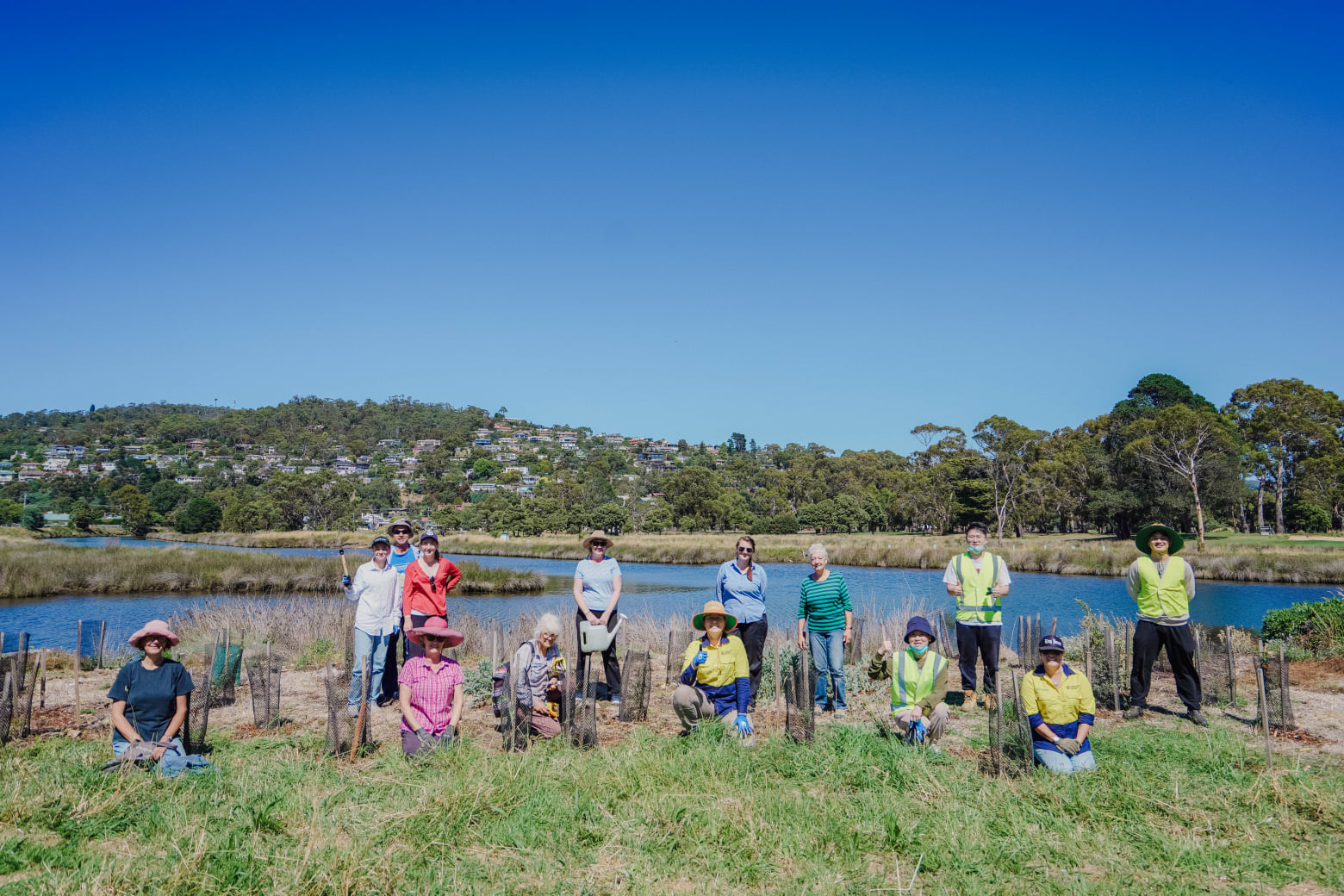
Why Community Landcare works
Community Landcare, and the State and Territory Landcare Organisations that support it, sit in a different part of the system.
We are member-based. We work through place. And we are structured to support communities over the long term - through governance, coordination, funding pathways and local knowledge.
That function is harder to see from the outside. But it is what allows community action to persist, adapt and scale over time.
As expectations grow around large-scale restoration, climate resilience and biodiversity outcomes, there is an increasing need to look not just at what is delivered, but what makes delivery possible in the first place.
That’s where this model becomes critical.
Not as a replacement for existing organisations, but as a complement, providing the embedded, place-based infrastructure that connects people, projects and outcomes on the ground.
What was encouraging is that this isn’t a one-way conversation. Countries across the network - including Ecuador, are keen to keep working together. There is real appetite for collaboration, shared learning, and building models that are grounded locally but connected globally.
Because the challenge is the same everywhere.
How do you support communities to keep showing up, not just once, but over years and decades, and turn that effort into lasting environmental and social outcomes?
In Tasmania, Landcare groups and volunteers are already doing that work. They are restoring landscapes, protecting biodiversity and strengthening their communities.
Our role is to make sure they are properly supported to keep going, and to keep improving how we do that.
If we get that right, the impact does not just stay local. It connects into something much bigger.
And that is where this next phase becomes important, engaging and re-engaging with members, improving how we collect and use data, and making sure what we design actually lands well on the ground.
Peter Stronach
CEO, Landcare Tasmania
