

Landcare Action Grants open round 5 update
The Landcare Action Grants 2024-25 program delivered projects and events at a landscape scale bringing together partners, primary producers, First Nations communities and stakeholders to build momentum in a region. There was an emphasis on establishing priorities and co-design of projects with Landcare members, farmers, local councils, regional NRMs and the State Government.
40 community projects transforming Tasmania’s landscapes
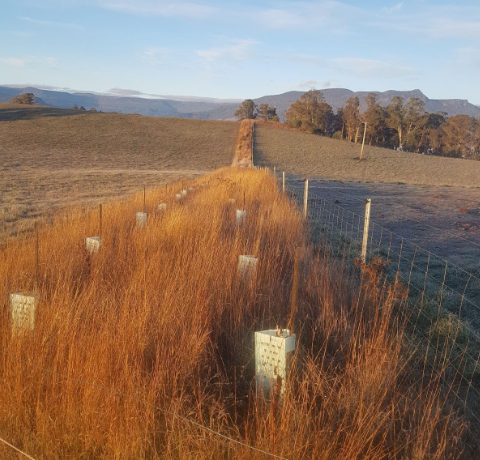
Landcare Tasmania is celebrating the completion of the Landcare Action Grants Open Round 5, delivered in partnership with the Department of Natural Resources and Environment Tasmania. This statewide program invested $463,500 into practical, community-led projects. These projects are strengthening the health of our landscapes, waterways, farms, biodiversity and communities.
Thanks to the commitment and passion of grant recipients, this investment went even further. The round generated an incredible $656,000 worth of in-kind contributions, meaning for every $1 granted, the community contributed an additional $1.40. This level of co-investment reflects deep community ownership and ensures long-lasting stewardship of the land well beyond the life of the grant.
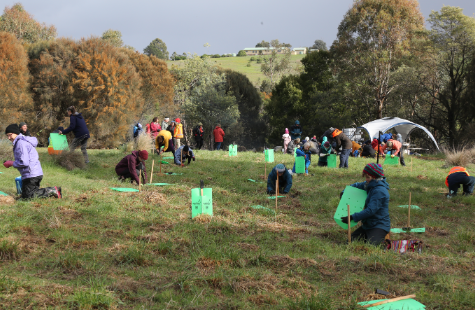
A snapshot of what was achieved
Across 40 funded projects, Tasmanians delivered an extraordinary volume of on-ground work, including:
-
22,723 native plants established
-
390 hectares of land improved
-
185 hectares of weeds removed
-
32 km of fencing installed to protect riparian areas, shelterbelts and wetlands
-
107 hectares managed to reduce erosion
-
378 volunteers involved
-
12 new biodiversity monitoring transects established
These collective efforts are restoring habitat, supporting threatened species, improving farm resilience, and protecting water quality across the state.
Spotlight on community impact
Restoring river health on the Detention River
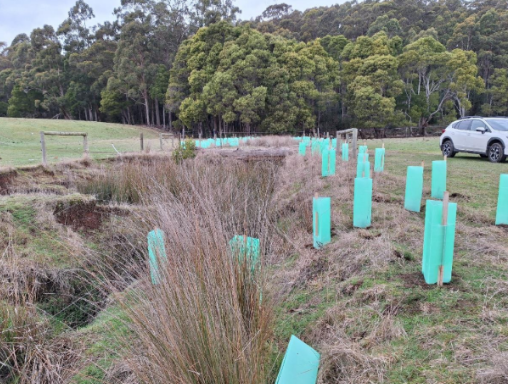
One stand-out project worked to stabilise eroding banks along the Detention River and improve habitat for Giant Freshwater Crayfish, one of Tasmania’s most iconic threatened species. By planting 1,000 native plants and fencing to exclude stock, the project created shade and cool refuges essential for crayfish survival. The work not only supports biodiversity but also strengthens riverbank stability and water quality. These are benefits that will continue to flow downstream for years to come.
Creating habitat and connectivity at Windsong, Marrawah
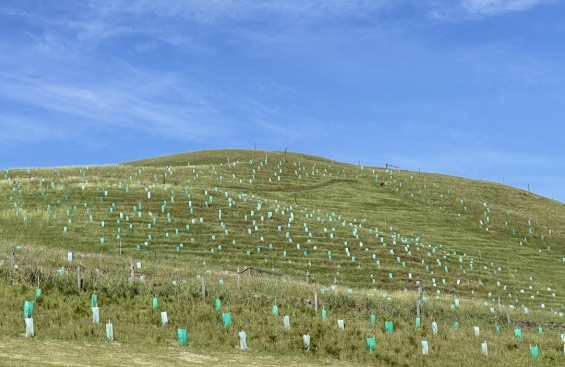
On Tasmania’s rugged northwest coast, the Windsong property undertook an impressive restoration to protect and expand Eucalyptus ovata woodland and coastal heathland. Over 1,300 native seedlings were planted and 1.44 km of fencing installed to support the regeneration of these threatened communities. The project is already improving biodiversity, boosting carbon sequestration potential, and demonstrating to neighbouring farms how habitat restoration can work hand-in-hand with productive agriculture.
A statewide impact
Beyond the featured case studies, this round supported a wide diversity of projects, including:
-
Gorse control across 30 hectares in Petcheys Bay through a collaborative community effort
-
Farm dam and wetland restoration to enhance water quality and habitat
-
School-led revegetation, including Waimea Heights Primary School’s 'legacy of regeneration'
-
Landscape-scale willow removal along the Agnes Rivulet, building on 25 years of community care
-
Riparian restoration to improve river health from Penguin Creek to Clarence Plains Rivulet
-
Shelterbelts and biodiversity corridors improving farm productivity and habitat connectivity
Each project contributes to a more resilient and biodiverse Tasmania.
Thank you to all our grant recipients
To every farmer, volunteer, Landcare group, school, and community organisation involved: thank you. Your time, skills, passion, and personal investment are the foundation of these achievements. Together, you’ve delivered environmental outcomes that will benefit Tasmania for generations.
Your efforts continue to demonstrate how powerful community-led conservation can be when supported with flexible, on-ground funding.