

2025 Member Snapshot
05 August 2025 - Each year we take a snapshot of our membership. Our members form a network of people and organisations across the state who are making a difference in their local environments. In this snapshot we will look at our members and what they're working on!
A note on Membership category changes
In 2024 several amendments were made to the Landcare Tasmania Constitution, to better define the criteria for each of our membership categories, and who was eligible:
- Community Care Group Members are defined as a group of people operating in the character of a Not for Profit with a specific Landcare purpose.
- Associate Members are defined as any entity who is interested or involved in Landcare, but with an unrelated main purpose. This category now includes School members, who were previously included as groups. A change in fee structure was also introduced to make this category more accessible.
- Individual Membership is open to any person who is involved in, or is seeking to become involved in Landcare activities.
251 Groups & 31 Associate Members
Member Groups are Landcare, Bushcare, Coastcare, 'Friends-of' groups, and other groups of people whose primary aim is to improve the health of our natural and working landscapes. A group can form around a location (a reserve, a town, a property, group of properties) or a topic (e.g. threatened species, community nursery). These are the core of Landcare Tasmania Membership and the main focus for support - They are also the only members with voting rights. For more information on forming a Landcare Group, read our Start A Landcare Group page.
Associate Members are Schools, Farms, Businesses, Trusts and Community Associations who are interested in community Landcare issues & activities. To see our current Associate Members view their directory on the Our Members page.
What do Landcare Member Groups & Associates contribute?
Our renewing members reported on their volunteer activity in 2024:
- 8,400+ regular volunteers - The number of volunteers who regularly attend events.
- The average Landcare group has 26 members with 6 leaders or committee members.
- 4,600+ events were held around the state, including working bees, meetings, outings, market stalls, info sessions, workshops and school activities.
- 154,000+ hours were contributed by volunteers.
What issues are our members addressing? What activities do they participate in?

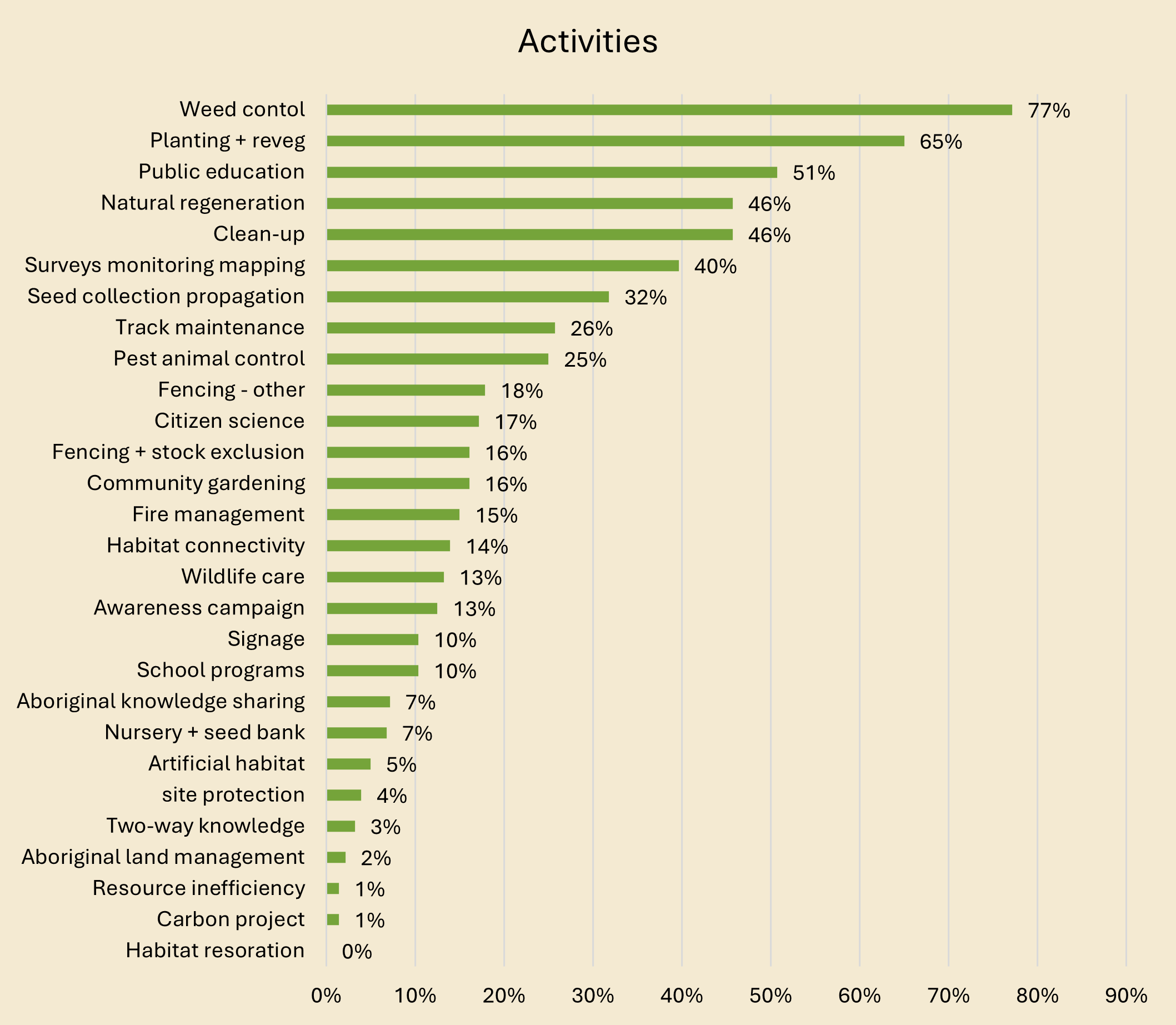
There has been very little change in the issues that our members are aiming to address. Biodiversity remains the top issue, being addressed by 78% of Groups and Associates in 2024. The other top issues included erosion control (40%), climate change (33%), sustainable agriculture (24%) and threatened wildlife & lifestyle sustainability (21% each).
Where are our members active?
We asked our members whether they were active on public land or private land, in natural, rural, urban or agricultural landscapes, and in what habitats (note that many of our members are active across multiple settings). The data here is presented alongside the data reported in the 2024 renewal.
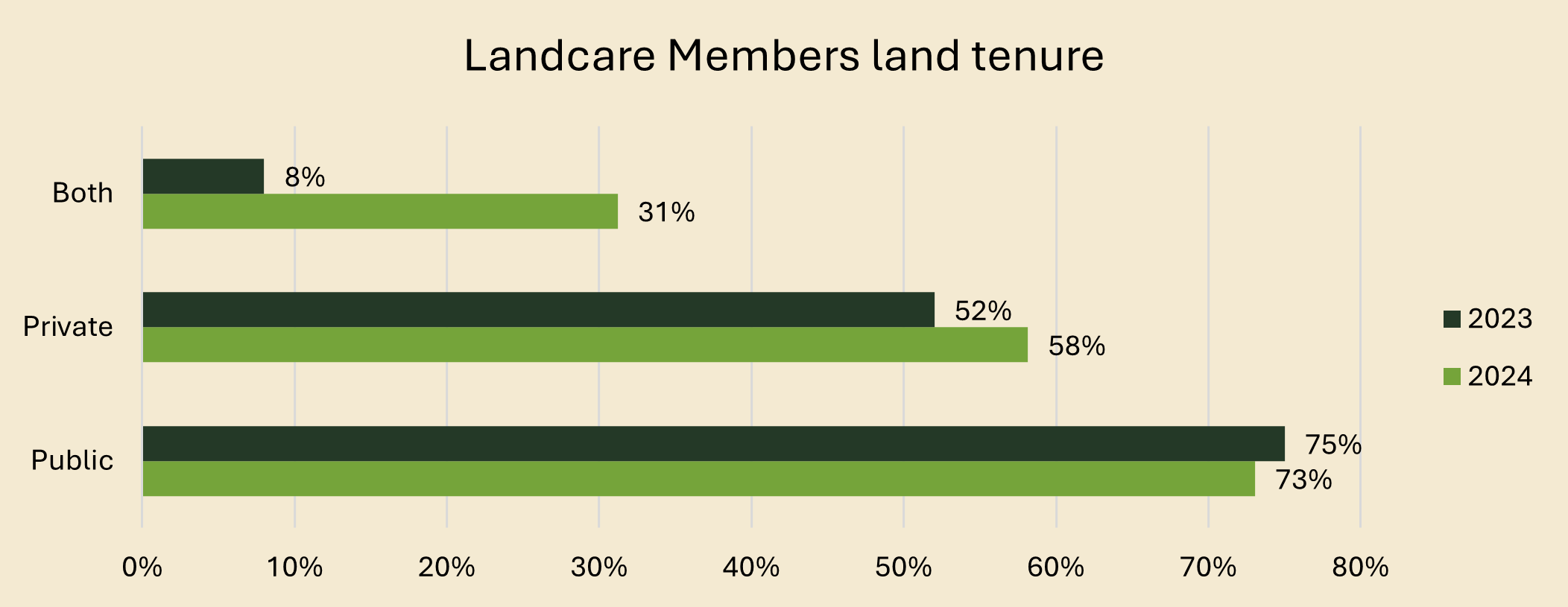
The percentages of members working in private or public land has changed slightly, however most notably there has been a significant increase in the percentage of members working in both public and private land. going from 8% to 31%.
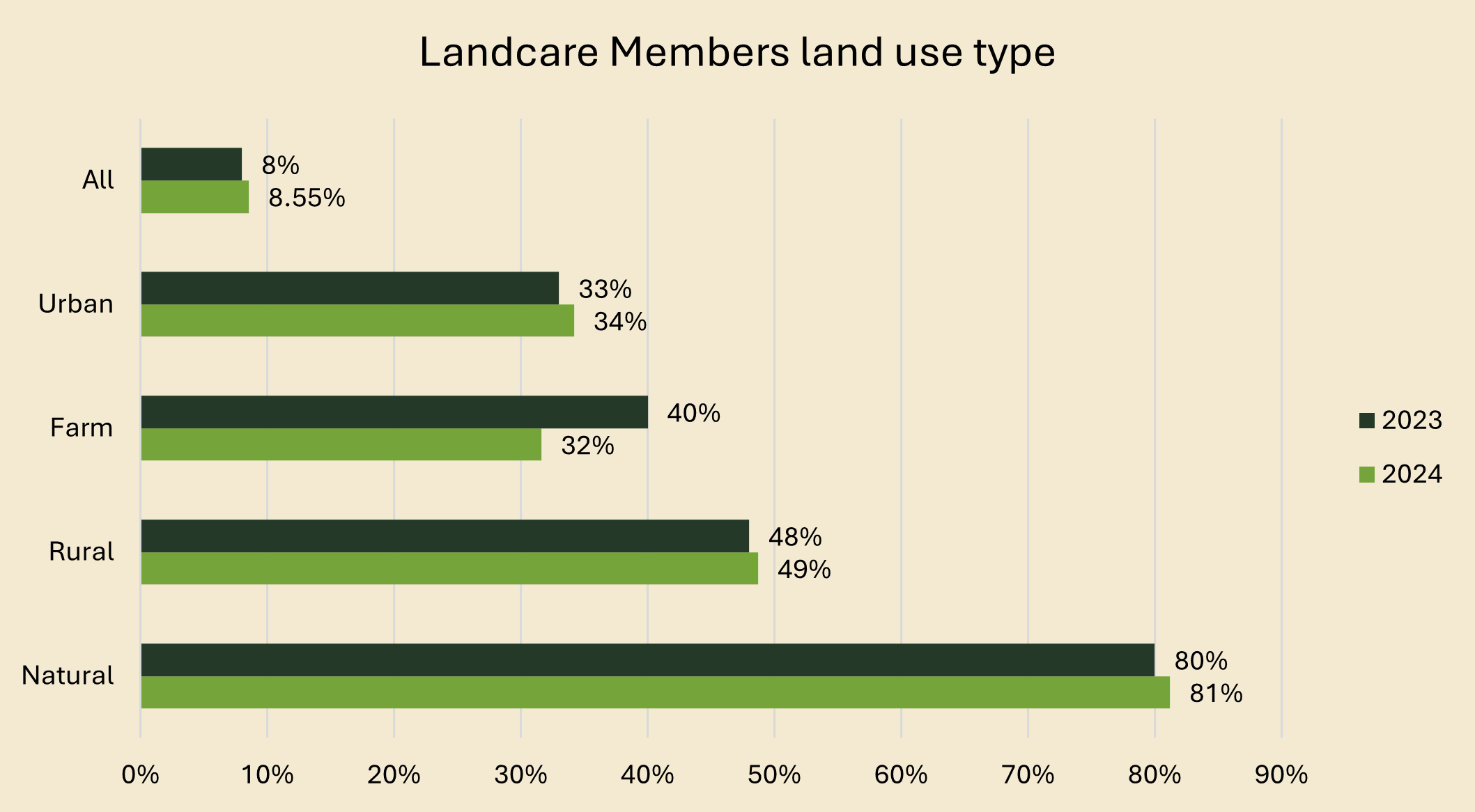
Land use types have changed slightly, with the most notable change being a decrease in the percentage working in agricultural land by 8%.
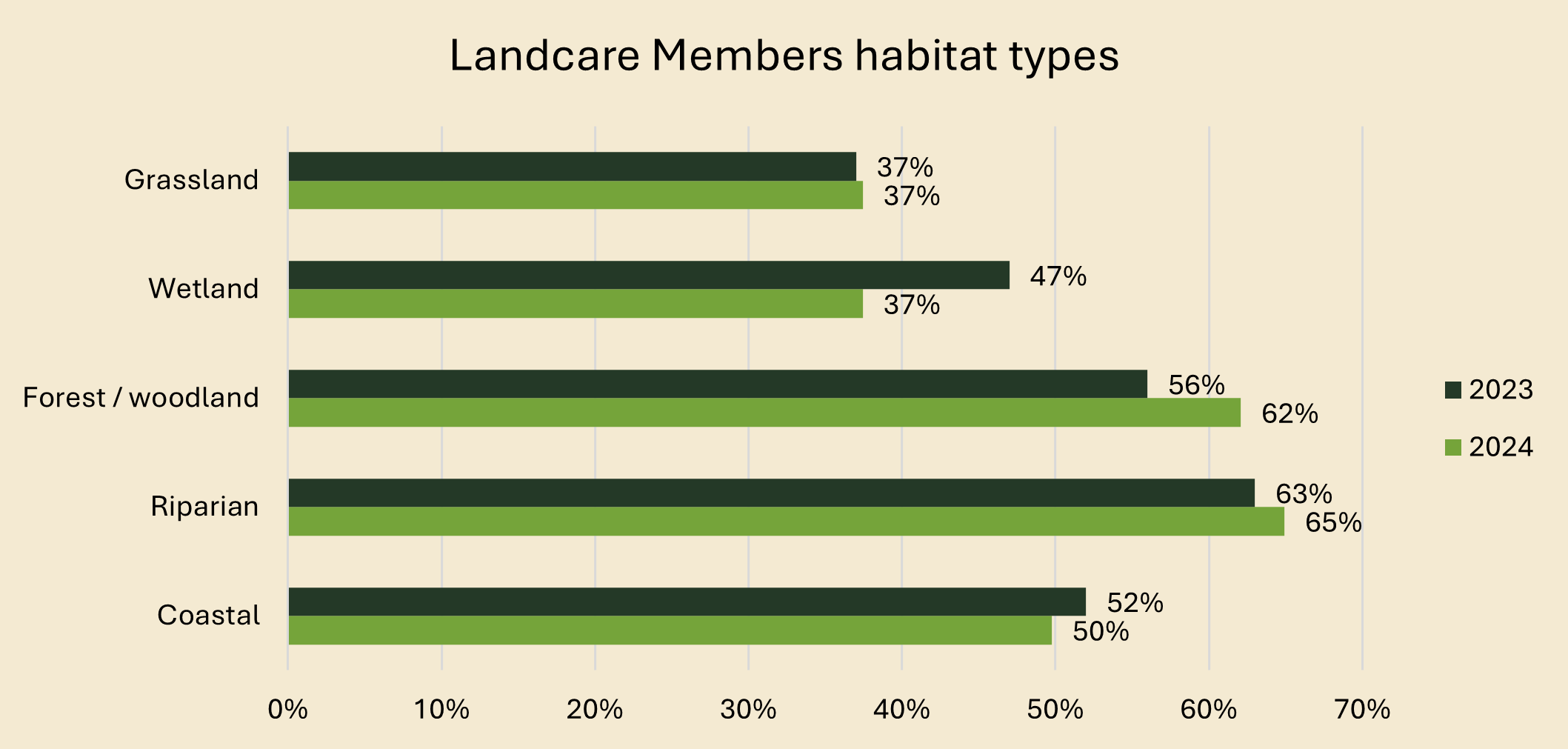
Habitat types have also changed slightly, with the most notable change being a decrease of 10% in members working in wetland environments.
Individual Members
Becoming an individual member of Landcare Tasmania is a great way to become involved in the Community Landcare movement in Tasmania. While individual members do not have voting rights, they can access our members-only resources. This includes our Project Bank, giving individuals the opportunity to receive grant funding.
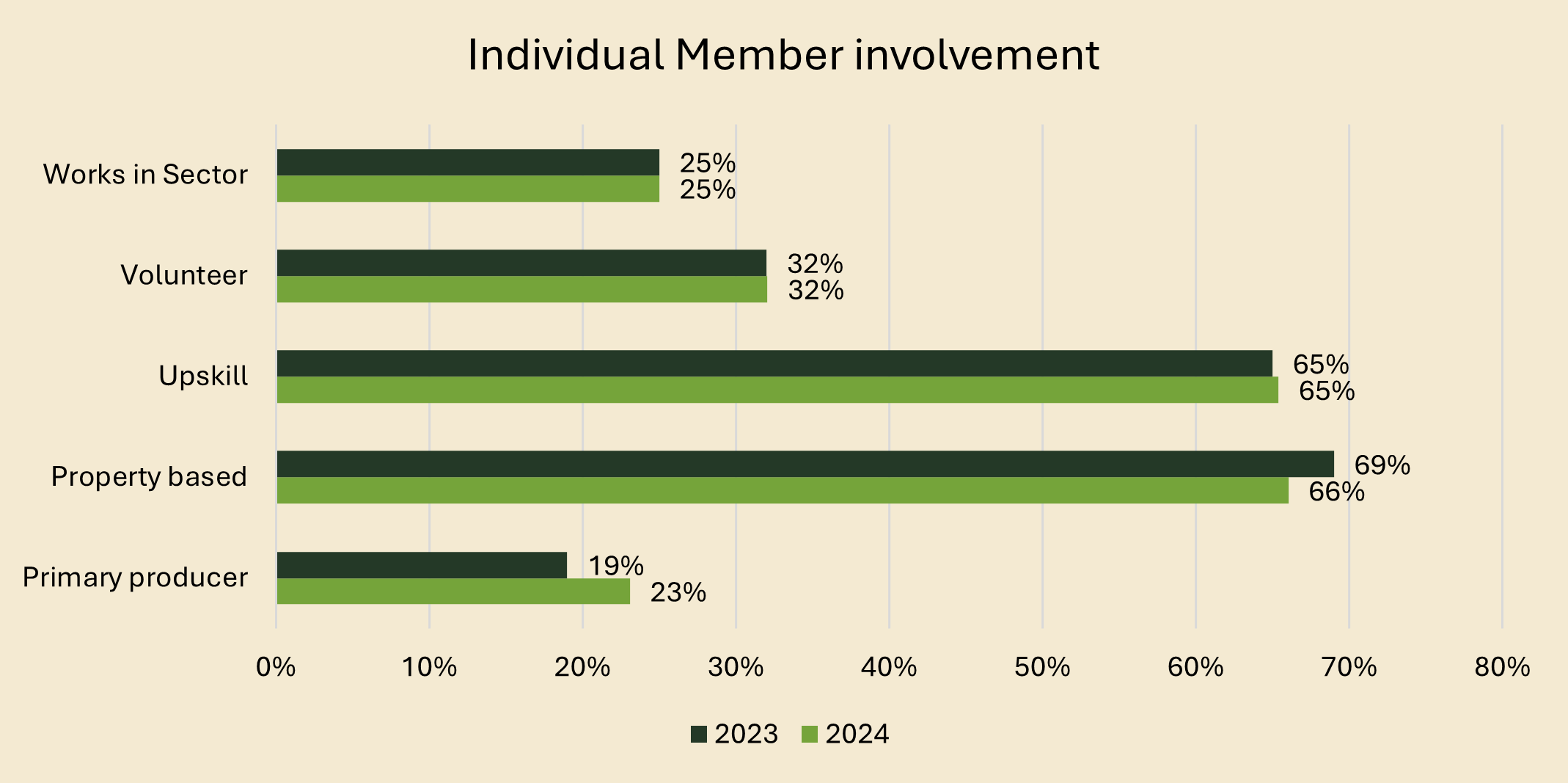
Most of our individual members are property based or interested in upskilling, they are also volunteers, primary producers or people working in the environmental sector.
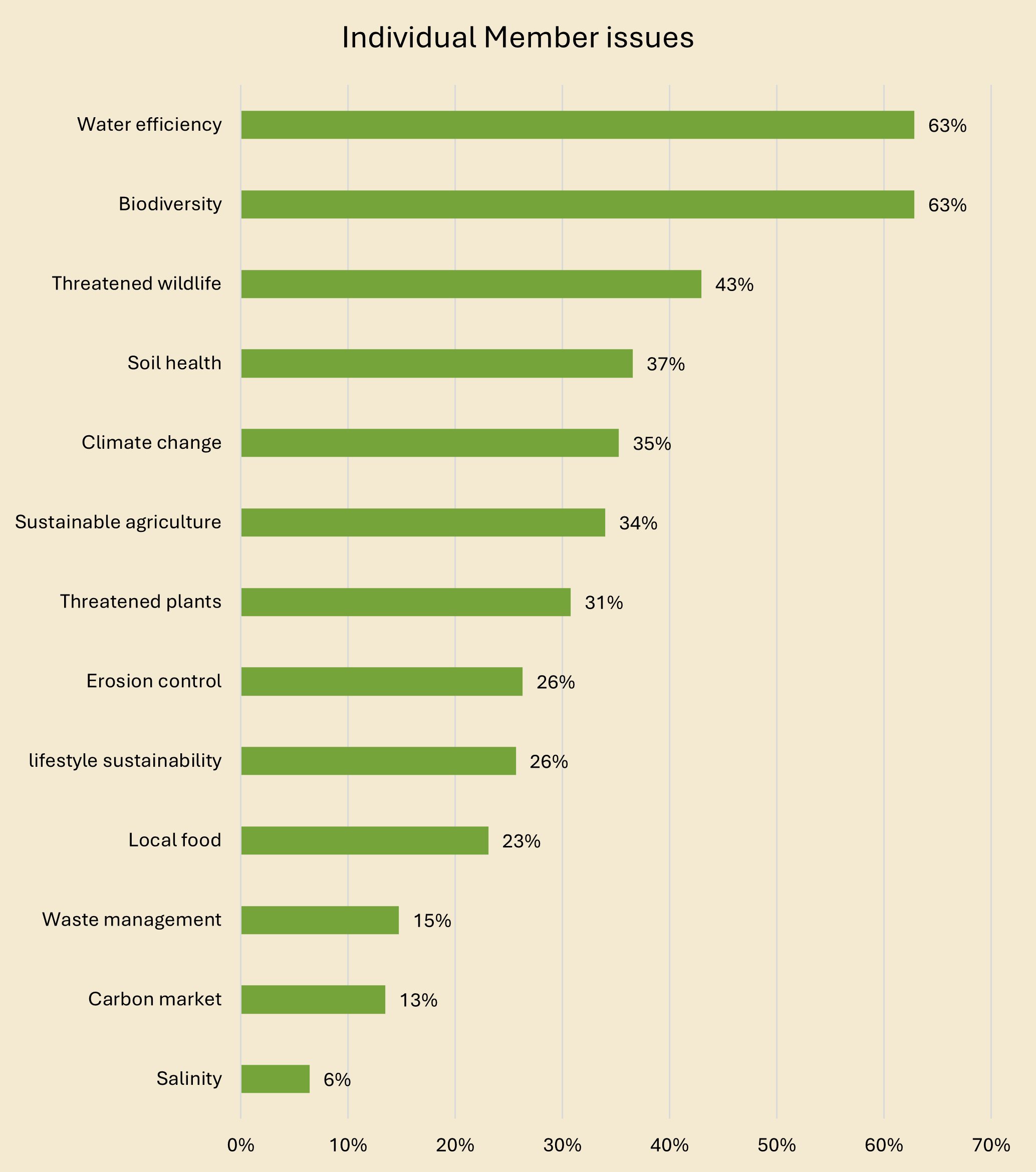
Membership renewal in 2024 was the first time we asked our individual members about the issues they were addressing and the activities they undertook.
Water efficiency and biodiversity were the top issues for individuals (63%), with threatened wildlife (43%), soil health (37%), climate change (34%) and sustainable agriculture (34%) also being important to our Individual members.
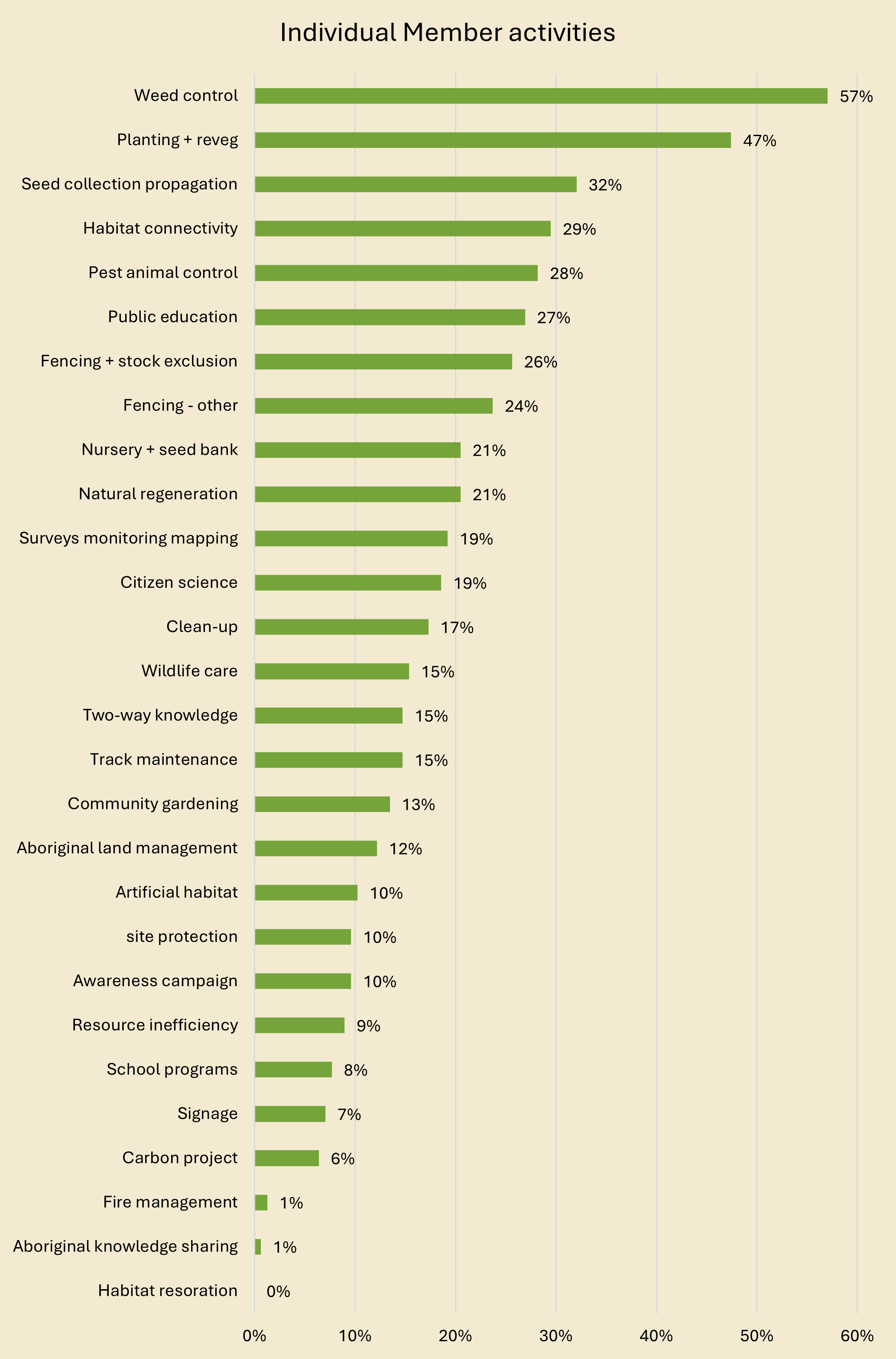
In terms of activities weed control is the most popular for individuals (57%), while planting and revegetation (47%), seed collection & propagation (32%), habitat connectivity (29%) and pest animal control (28%) were also popular.
Join us!
We'd love to welcome you into the community Landcare network too! There are many options available for people wishing to become involved:
