

Waste & Wildlife program sparks curiosity
During the 2025 Strong Children Homeschool Camp, a group of enthusiastic children joined Landcare Tasmania at The Lea Scout Campsite for a Waste & Wildlife workshop. Despite windy weather forecasts keeping activities indoors, the children were keen to participate. Their curiosity, passion, and connection to nature made the day truly memorable.
Curious minds explore waste & wildlife at homeschool camp
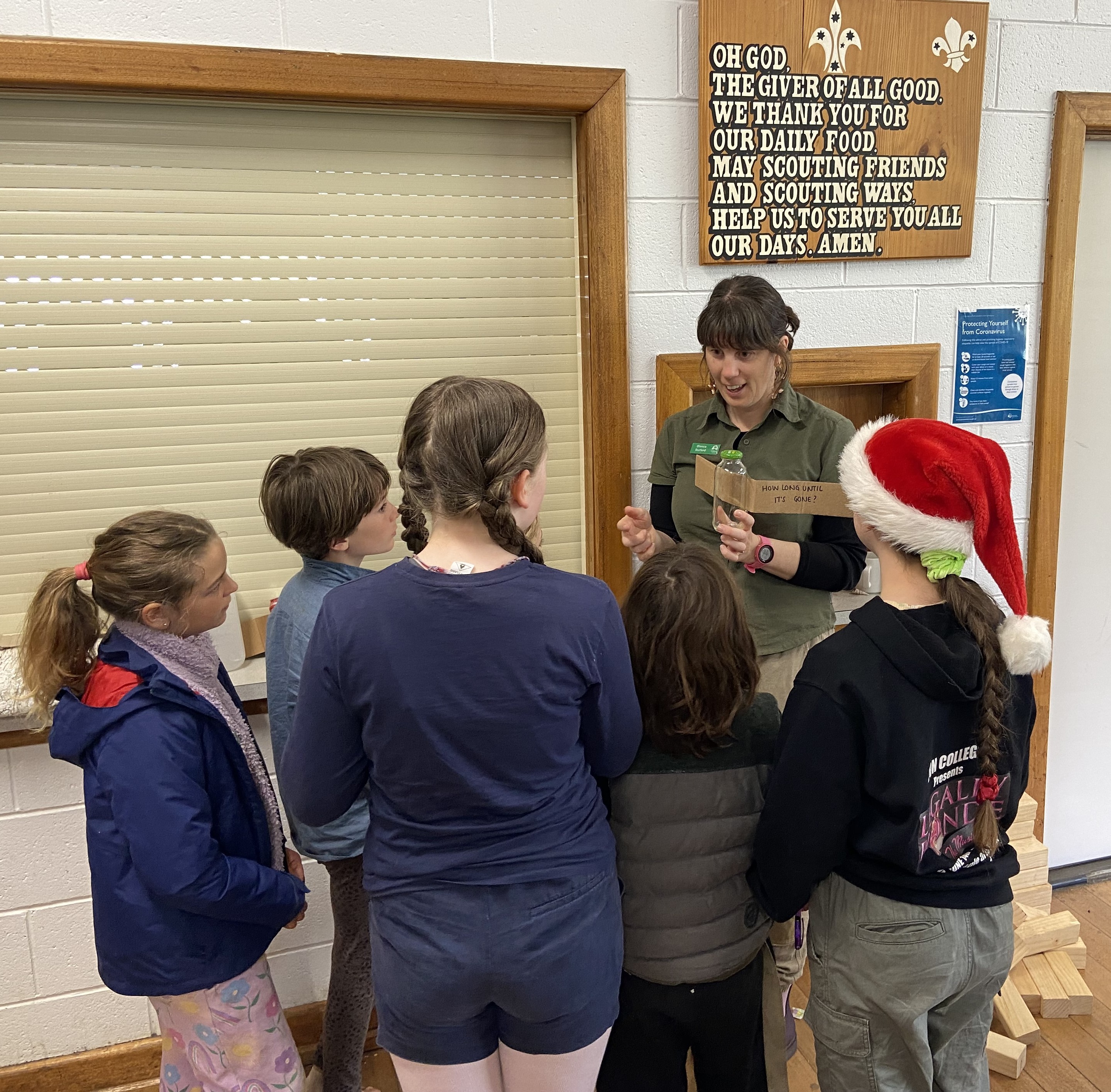
Landcare Tasmania's education coordinator Bianca Burford working with the students to sort waste items in order of how long they take to break down in the environment.
Buzzing with curiosity
Even inside, the children were full of energy and enthusiasm. They shared observations from their own lives, asked thoughtful questions, and showed a genuine interest in how wildlife lives and thrives in Tasmania. Many demonstrated a strong personal connection to nature, sharing stories of local animals they had seen or experienced in their gardens and neighbourhoods. Every question sparked new conversations, and the children were eager to learn from each other as well as from the workshop activities.
“We have a platypus in our dam.” - Ember
“Wildlife should be protected and cared for. There are species that we have here in Tasmania that don't live anywhere else!” - Bruni
Wildlife and big picture thinking
Microbats, little penguins, Bennett’s wallabies, and platypus all featured in discussions. Children asked imaginative questions about their behaviour, habitats, and how humans can help them stay safe. Their passion for wildlife was evident in the care they took in considering how their choices could protect these animals.
Microplastics
The children explored how tiny pieces of plastic, called microplastics, can end up in waterways, soils, and ecosystems — and how they can harm wildlife. This led to exciting discussions about ways to reduce plastic use and prevent pollution.
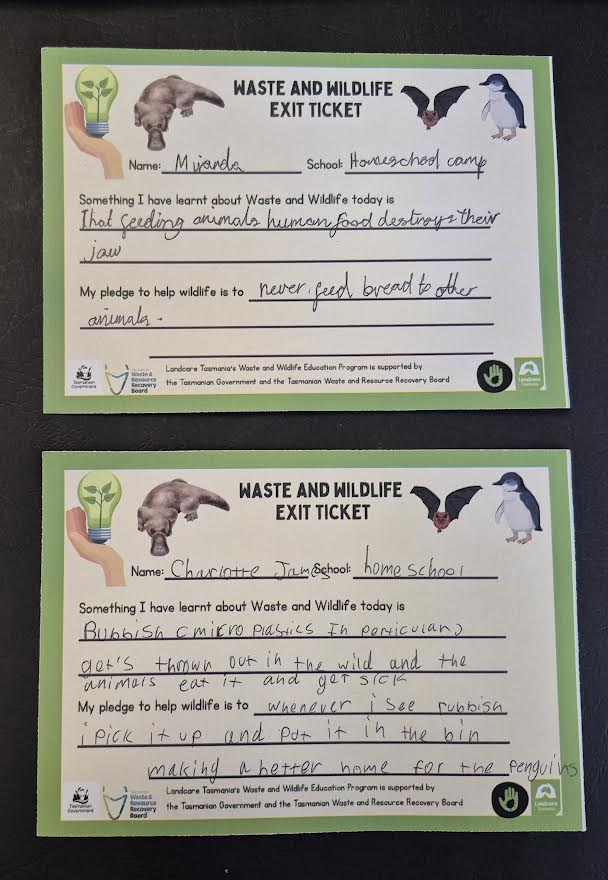
“Something I have learnt about Waste & Wildlife today is that plastic takes a long time to decompose, and when it does it is bad!” - Beth
“Using a reusable water bottle instead of a plastic one helps the animals.” - Lillian
Organic waste and feeding wildlife
Children also considered organic waste, such as leftover food, and how it can be composted to reduce landfill and support healthy soil and wildlife habitats. Discussions included why feeding wildlife human food can be harmful: it can make animals sick, disrupt natural behaviours, and attract pests. The children shared ideas about responsible ways to interact with wildlife and care for their habitats.
“Remember to check for and pick up leftover food, bread, and plastics after a picnic.” - Miranda
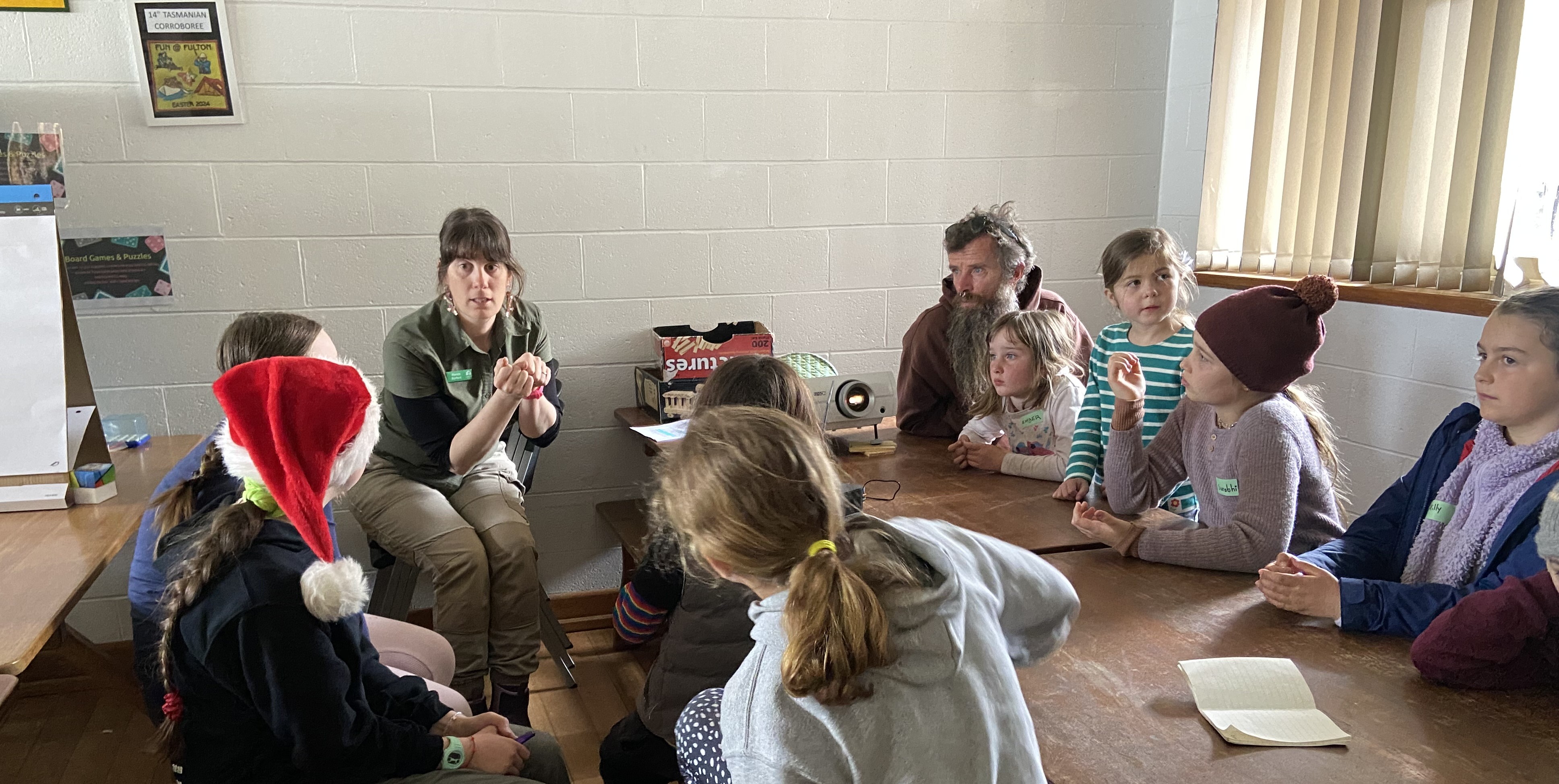
Talking together about the way that bread affects Bennett’s wallabies teeth and how they chew and grind the native grasses and vegetation that they eat.
Ideas from the children
The children shared both practical and ambitious ideas for helping wildlife and reducing waste:
Big ideas:
- Make plastic bottles illegal
- Lobby the government to change laws so they work for wildlife too.
-
Talk to council about how people can do little things to help look after our wildlife
Little ideas:
- Buy items without packaging
- Collect 1kg of plastics at the beach
- Stop using plastic netting and find alternatives
- Compost organic waste at home
-
Avoid feeding wildlife human food
These ideas demonstrated the children’s creativity, thoughtfulness, and commitment to protecting wildlife and caring for the environment.
Game on!
A highlight for the children was participating in the Waste & Wildlife board game, which encouraged curiosity, teamwork, and creative problem solving. The game offered a fun, hands-on way for the children to explore the connections between human behaviour, waste, and the wellbeing of wildlife, while keeping them actively engaged throughout the session.
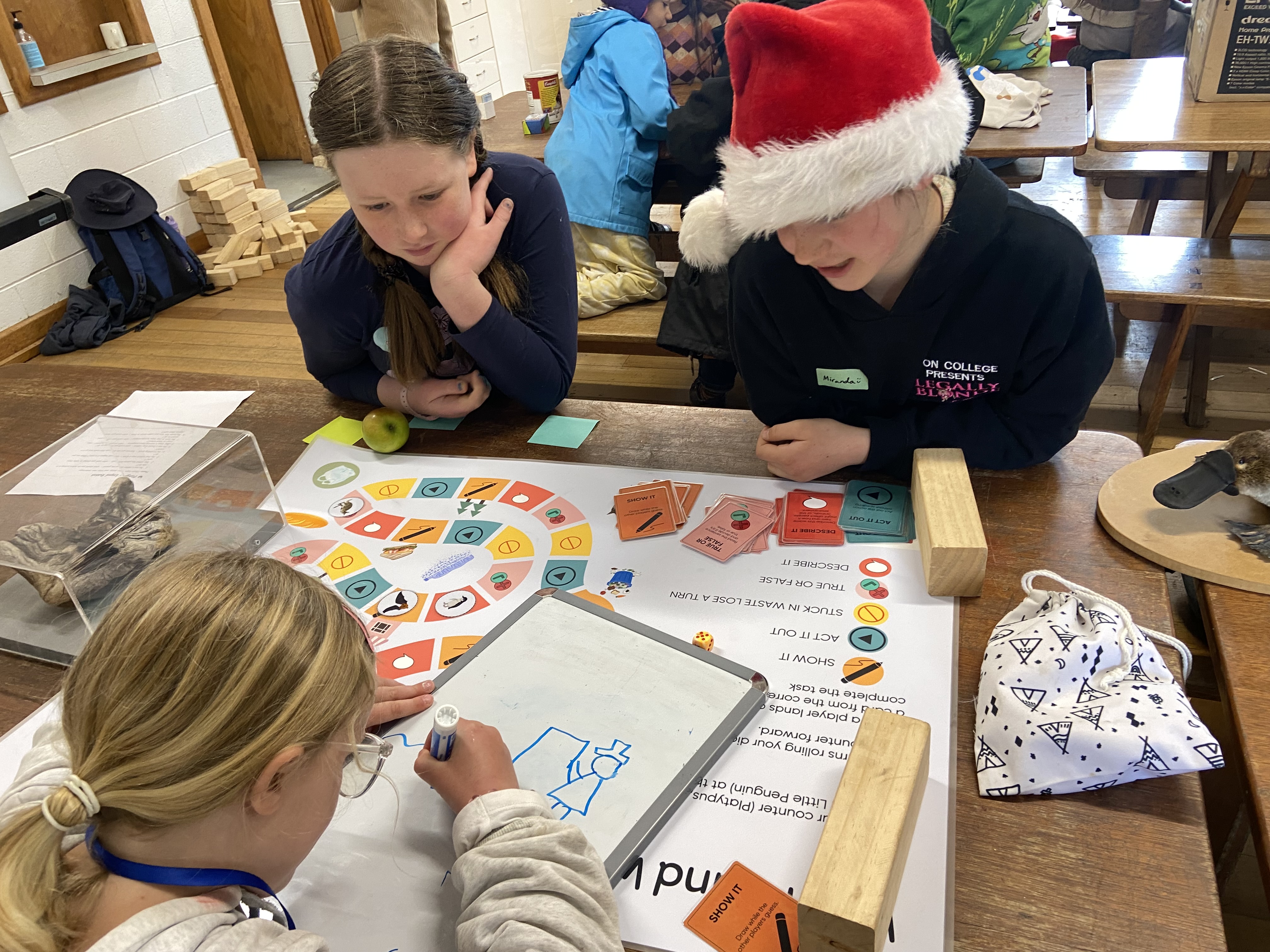
Homeschool camp children playing Landcare Tasmania’s Waste & Wildlife board game.
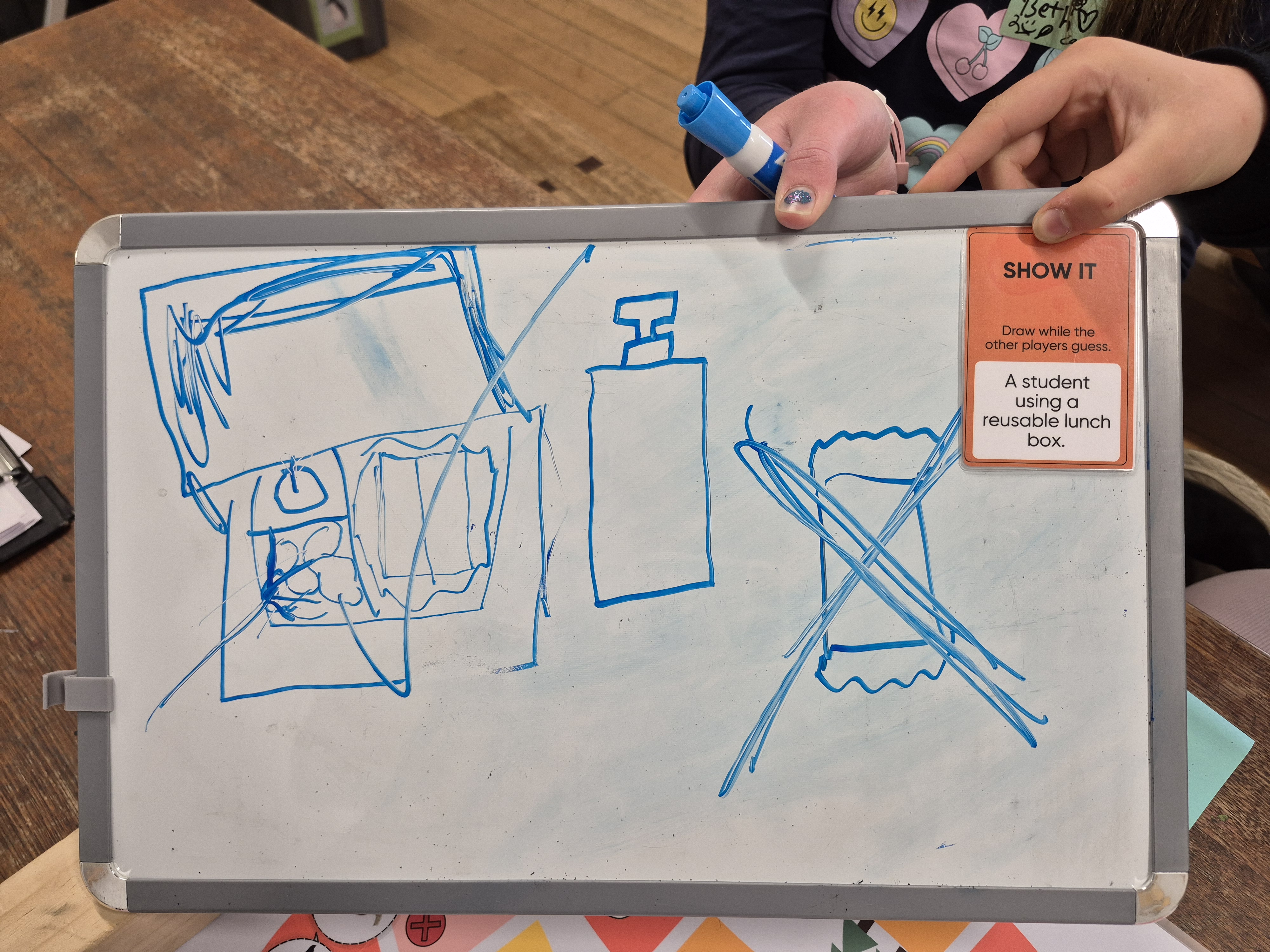
QUICK! How would you draw this card? Here is a fast sketch from the day of a reusable lunchbox with a big tick and some food wrapped in plastic with a big cross. The other children had to guess!
Thank you!
A big thank you to the families and organisers of the 2025 Strong Children Homeschool Camp for welcoming us to The Lea Scout Campsite. Even with the weather challenges, the children’s enthusiasm, passion, and reflections made the workshop a highly engaging and memorable experience.
Landcare Tasmania's Waste & Wildlife Program is supported by the Tasmanian Government and the Tasmanian Waste and Resource Recovery Board.
Educators interested in bringing the program to their children can contact [email protected]

