

Resources for tackling weeds in Tasmania
There are many weeds in Tasmania, and a wide range of methods for controlling and eradicating them have been tried, studied and implemented. Many Landcare Tasmania members are dedicated to managing and eradicating weeds across the state.
We've collated some useful some resources and links for helping tackle these pesky plants below.
Weed Identification:
-
Tasmanian Weeds Index
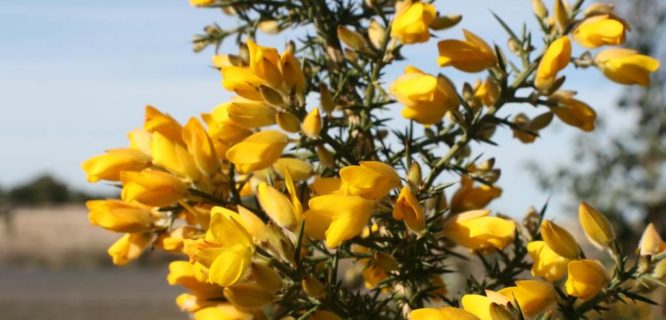 (NRE)- Use the Weed indexes to identify declared and non-declared agriculture weeds found in Tasmania. Information includes images for identification, control guides, and management plans.
-
Environmental Weeds Tasmania (NRE)- Weeds that invade bushland and threaten native plants by out-competing them are known as environmental weeds. The List of Common Environmental Weeds includes description, control measure and impact. You can also refer to the Weed Warning Booklet of Environmental and Agricultural Weeds of Tasmania.
-
Weeds Australia- A national weeds platform designed to connect you with up-to-date knowledge to make informed decisions about managing invasive weeds within Australia. Download the Weedscan app, it's an identification, recording and alert system for over 450 priority and other weeds.
-
Tasmanian Weeds Facebook Community- Not sure what the plant you're looking at might be? Why not link in with an community of passionate weed busters to help identify what your pesky plants are and work towards managing them. Join through their Facebook Group.
-
Invasive grasses- The NSW government has produced a 3-D model for Chilean Needle Grass, African Love Grass and Serrated Tussock, to help identify invasive grasses in Australia.
- iNaturalist is a citizen science tool to use to help ID and record flora and fauna. Data is linked to the Atlas of Living Australia and Tasmanian Government's Naturals Values Atlas. Download the app here.
General Weed Control:
- Check out the Spanish Heath Resource Page we've made with Central Coast Council. And Landcare Tasmania's Spanish Heath Herbicide Control- How To Video
-
Priority Weeds in North-West Tasmania - Axel Meiss. Axel is a local weed expert in Tasmania, at a workshop in 2026 hosted by Landcare Tasmania he presented on 11 priority weeds for the region.
-
In the 1960s and 1970s Joan and Eileen Bradley developed a series of weed control and native vegetation recovery techniques through trial and error. Their work was the beginning of bush regeneration in New South Wales. The ‘Bradley method’ involved methodically clearing small areas in and around healthy native vegetation so that the each area was re-colonised by the regeneration of native plants, replacing the weeds. You can read more on the Australian Association of Bush Regenerators (AABR) website .
-
Cradle Coast NRM - Template for Weed Management Plan is a useful tool to assist you in the following:
- List the priority weeds for management on your property.
- List the legal requirements for managing weeds that apply to my property.
- Identify high risk areas for weed spread on my property and mitigation measures.
- Identify clean and valuable areas on my property as high priority areas to keep weed free.
- Identify the annual action plan for managing weeds on my property.
-
Identify how weed control on my property will be followed up each year.
- Biological Control of Weeds:
There are over 270 biocontrol for 60 weed species in Australia. Australia’s national science agency, CSIRO, has been developing biological controls since the 1920's. Biocontrol involve introducing co-evolved ‘natural enemies’ of a target weed to reduce its density to a level that is acceptable and that will maintain the weed at that acceptable level over time. Extensive testing over many years takes place to ensure biocontrol agents are be host-specific and don't damage any native or other important plant species. Landcare groups in Tasmania have been involved in community releases of biocontrols for African Boxthorn, Sea Spurge and Gorse.
-
-
- You can learn more about Biological Control in Tasmania, by accessing this presentation by the Tasmanian Institute of Agriculture.
-
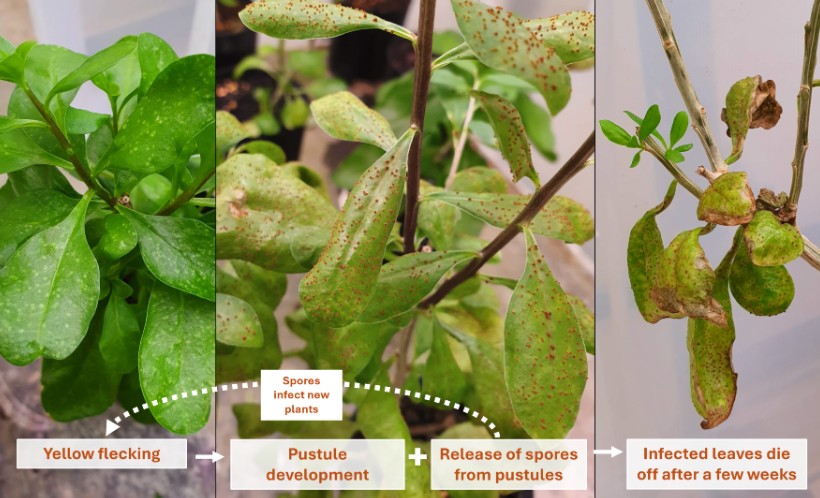
African Boxthorn Biocontrol - safe, host-specific rust fungus (Puccinia rapipes) that infects the leaves and fruit of African boxthorn plants, the rust fungus will not kill African Boxthorn however, if it establishes well and causes severe disease in the weed, it will reduce its growth and reproductive output. Landcare Tasmania in partnership with CSIRO are inviting community members to be apart in the release of the biocontrol in Tasmania in 2026-27. For more information, please click here.
-
-
- View the webinar held on biocontrol in Tasmania in February 2026
-
Sea Spurge Biocontrol - CSIRO initiated research to develop a biocontrol solution for sea spurge in 2009 and an agent was found in the Mediterranean region. In 2021 the community worked with CSIRO to release the biocontrol in Tasmania. You can read more about Community Action in Managing Sea Spurge.
If you'd like to participate in the community-led releases, please email Dr. Hunter. Contact details can be found in the PDF download: Sea-Spurge Biocontrol Information Sheet (pdf)
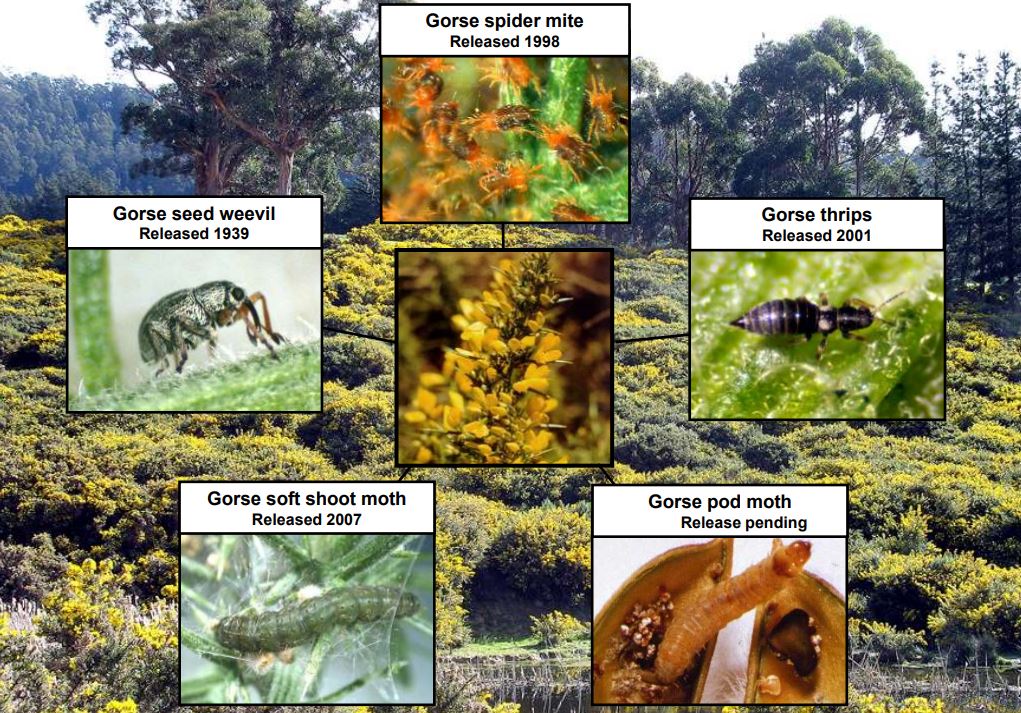
Gorse Biological control - The Gorse Moth, which was first released in Tasmania in 2007, and Paraconiothyrium sp (a type of fungi native to Tasmania), have been observed as being extremely damaging to gorse when used together. More research is needed, but so far this strategy shows promise of being another much needed approach in the fight against gorse. Led by biological control expert John Ireson, Landcare Tasmania has released the biological control agents at sites across the North and North West of the state. You can read the 2022 Project report here.
- If using chemicals to control weeds- it's important for your health and the health of the environment to ensure you do so safely and effectively; ensure you have the correct permits, you have the correct PPE, and follow the instructions on the products Material Safety Data Sheet (MSDS) for correct use and storage. Please head to NRE's AgVet Chemicals webpage for more information. You can read more here - Agvet Code of Practice for Ground Spraying and Guidelines for Safe and Effective Herbicide Use Near Waterways (NRE)
Specific Weed control:
